The Stars at Night are not so Big and Bright: The harms of light pollution and what you can do about it.
by Susie Hairston
A long, long time ago, when it was possible, in some locations, to see galaxies far, far away, I had the good fortune to go to an island in the Caribbean. Far away from the lights of the town on the other side of the island, I lay outside on the beach for hours and stared up at the stars, more stars than I had ever seen before and have ever seen since.
I often feel we are being robbed of wonder. So many things in our world that are awe-inspiring are being stripped away from us every day.
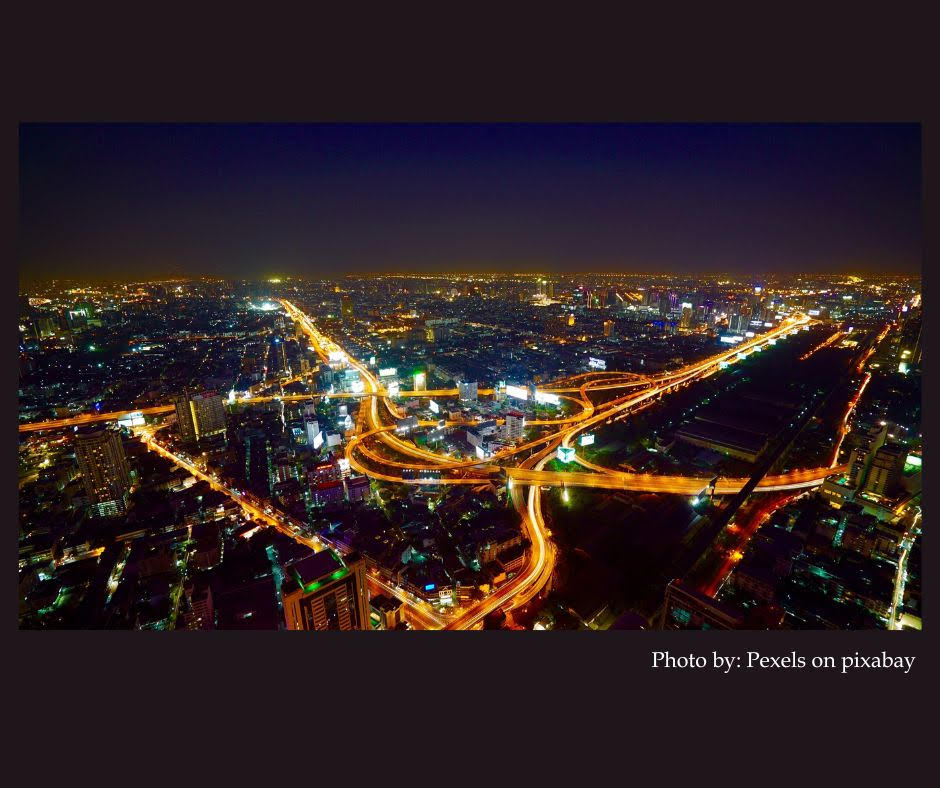
One of those things is the magnificence of the night sky. It is sad for me that living here in Houston, with all its massive light pollution, we are lucky if we can see Venus and a few stars here and there occasionally. But light pollution is not just about being stripped of the wonder and joy at seeing the galaxies blazing across the night sky, it is also a threat to the health of humans and other animals.
What is light pollution
“Light Pollution is the excess or inappropriate artificial light outdoors. It can either be glaring, leak into other spaces, or create a glow across the whole sky that we in Houston are all too familiar with. https://www.nps.gov/subjects/
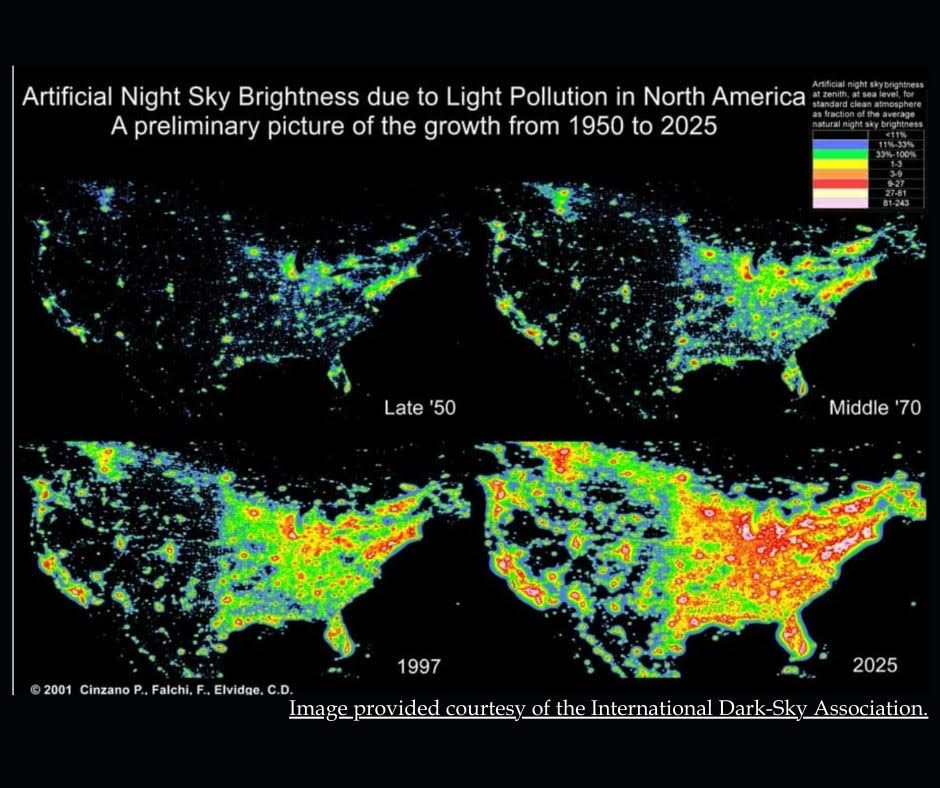
Growth of light pollution:
Light pollution is brightening in already light polluted spaces at the rate of 2.2%/year and increasing the area that suffers from light pollution by 2.2%/year, increasingly squeezing out any truly dark places. “Furthermore, recent citizen scientists’ measurements indicate that the average night sky got brighter by 9.6% per year from 2011 to 2022, which is equivalent to doubling the sky brightness every 8 years. https://www.nps.gov/subjects/
Adverse effects of light pollution:
“Light pollution disrupts ecosystems, wastes energy, increases impacts of climate change and can have adverse health effects in humans.” https://www.nps.gov/subjects/
Harms to Humans:
In addition to being associated with eye strain, studies have shown that light pollution can affect circadian rhythms, and thus sleep, leading to “an increased risk of a number of chronic conditions—such as obesity, diabetes, hypertension, heart disease, stroke, anxiety, and depression.” https://www.cdc.gov/cdi/
Harms to Wildlife:
Almost half of all species are nocturnal. Darkness is a critical element of their habitats and they rely on it to nest, mate, and hide from predators.
Birds need darkness during migration in order to use the moon and stars for navigation. Light pollution can throw birds off course. Lights from buildings in urban areas can confuse birds, causing them to circle and become exhausted and die. Anyone who has heard a non-nocturnal bird frantically chirping away in a tree near a street light in the middle of the night knows how disruptive and harmful city urban lighting can be to birds.
One of the most well known examples of the harm of light pollution to wildlife is the disorientation caused by bright city lights that attracts baby sea turtles away from the light of the moon on the ocean and into the city where they are killed.
The National Wildlife Federation points out that scientists have identified light pollution as a factor in the massive decline of some of the world’s insect populations. “That threat is obvious to anyone who has witnessed moths and other nocturnal insects swarming around bright outdoor lights. The lights’ powerful lure may stem from the animals’ instinctual tendency to orient themselves by moonlight,” Just one flash of headlights can cause fireflies to stop their mating flashes. https://www.nwf.org/Home/

What you can do to mitigate light pollution
Big picture:
Fight to stop the spread of light pollution:
Some towns, such as Tucson and Flagstaff, in Arizona have lighting regulations that reign in light pollution. You could work with your neighborhood or town to develop plans and rules that would be effective in your area, or work with companies to get them to turn off lights in buildings at night.
Engage in larger initiatives to restrict the spread of light pollution. For example, submit a comment to the FCC in support of the International Dark-Sky Association’s campaign to stop “Reflect Orbit’s plans to deploy satellites fitted with in-space mirrors to beam reflected sunlight back to Earth at night,” lighting up the night as if it were day. The Dark Sky International Website has a clear and detailed explanation of the issue, and another related proposal, as well as how to submit comments and some talking points that can be used, followed up with links to the comment submission portal.
On the individual level:
Work on light pollution in our own area — use blackout curtains to stop light leaks outside and to make your room dark for proper sleep; turn off exterior lights; if you must have exterior lighting, minimize the number and make sure they are pointed down and shielded on top to prevent from sending light up into the night sky; and make sure they are warm lights.
Visit a dark sky park and experience the wonder.
Texas’s very own Big Bend National Park was designated as a certified International Dark Sky Park in 2022, becoming part of one of the largest dark sky areas in the world. At over nine million acres, the Greater Big Bend International Dark Sky Reserve spans West Texas and Northern Mexico.”
There are 195 IDA-certified dark sky parks in the world. Twelve U.S. National Parks are certified. Additionally, many of the U.S. national parks, though not certified, are dark sky areas. Find a dark sky place here..
Resources and References:
https://pmc.ncbi.nlm.nih.gov/
https://sierranaturenotes.
https://www.cdc.gov/cdi/
https://www.cnn.com/2025/10/
https://www.fws.gov/story/
https://www.lightpollutionmap.
https://www.
https://www.nih.gov/news-
https://www.nps.gov/subjects/
https://www.sleepfoundation.
https://pmc.ncbi.nlm.nih.gov/
https://sierranaturenotes.
https://www.cdc.gov/cdi/
https://www.fws.gov/story/
https://www.lightpollutionmap.
https://www.
https://www.nih.gov/news-
https://www.nps.gov/subjects/
https://pmc.ncbi.nlm.nih.gov/
https://www.sleepfoundation.