Dog Poop Threatens the Health of Local Waterways, Wildlife, and Us
by Susie Hairston
With the advent of social media, an individual who fails to pick up his dog’s poop is often publicly shamed on platforms like NextDoor and Facebook. But leaving your dog’s poop anywhere, including in your own backyard, is not just rude, it threatens the health of local waterways, wildlife, and us.
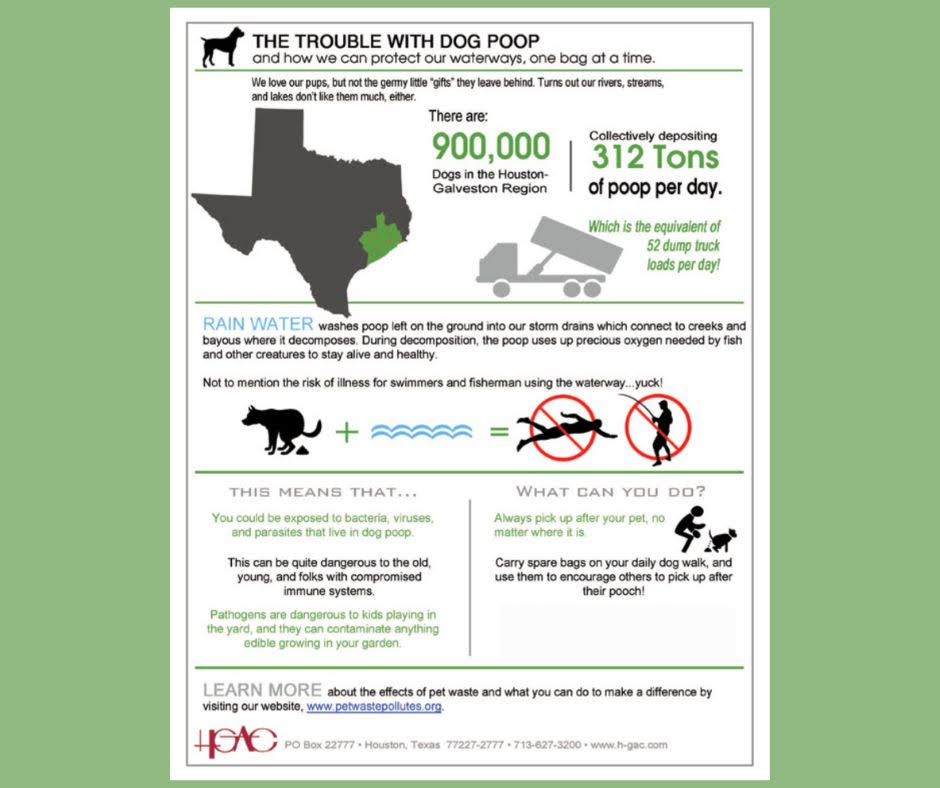
Dog poop is not a small matter. An HGAC fact sheet explains that the approximately 900,000 dogs in the Houston-Galveston area produce 312 tons of poop/day, the equivalent of 52 garbage trucks full of dog poop every single day.
Why Dog poop is a problem when left on the ground:
Pet waste is not a natural fertilizer.
Pet waste is considered a major source of urban stormwater pollution by the Environmental Protection Agency (EPA). When left on the ground, it eventually is washed by rain or irrigation systems into the storm drains and into our local water bodies.
- When dog poop breaks down in the water, it uses up dissolved oxygen necessary for aquatic life, often causing algae blooms and killing fish.
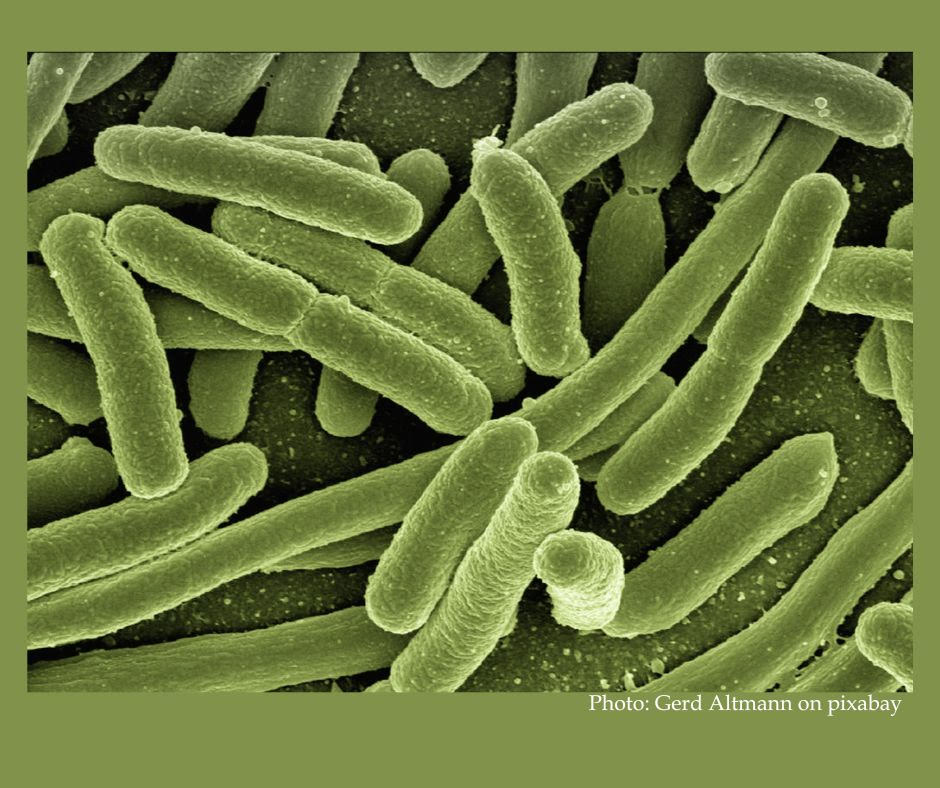
- One gram of dog waste can contain 23 million fecal coliform bacteria, which can cause serious illnesses in humans and other animals.
- It can carry parasites like roundworms that persist in the soil, posing long-term health risks to people and pets.”
Why it is not just a local problem:
According to Morton Sager, Project Manager at Bayou Preservation Association, “Every single bayou within the City of Houston is 200 to 1100 times above the legal bacterial limit for recreational usage. That’s why they tell you not to get in the water around here, because it is just so full of harmful bacteria. It doesn’t just affect the local Houston area. When a big rainstorm comes through, the bacteria contaminated water gets carried to Galveston. And then, three weeks later Galveston sends out an alert about a high bacterial load and flesh eating bacteria found in Galveston. Those bacteria problems in Galveston are, in part, a result of the fact that you didn’t pick up the dog poop in Houston.”
What is the proper way to dispose of dog poop?
HGAC and City of Houston recommend flushing it down the toilet (just the poop — no bags), or bagging it and placing it in the trash (landfills are lined to protect from things leaching into the soil — not that this is at all full-proof, hence the advice to bag it before putting it in the trash).
A note on cat feces: these should not be flushed down the toilet as they often contain toxoplasmosis, which can harm humans and is not eliminated by most municipal water treatment plants.
Do not dispose of pet waste by:
- Leaving it on the ground
- Composting it (Dog poop contains pathogens such as E. coli and salmonella and parasites like roundworms that will not be broken down in a backyard compost process and cannot be handled by most commercial compost facilities either, as dog poop must be separated from food waste and go through a special high-heat process).
Could I use a Doggie Dooley to dispose of dog poop?
A Doggie Dooley is a pet waste disposal system that is embedded in the ground. Enzymes are added to break down the pathogens and turn pet waste into liquid. However, a Doggie Dooley only works in well draining soil, not Houston clay, so Doggie Dooleys are not recommended for our area.
Houston is a city of bayous – connecting us by water. Please remember, we are all downstream of someone. Let’s all be good upstream neighbors and pick up and properly dispose of our dogs’ poop.
Resources and References:
https://www.h-gac.com/clean-
https://www.h-gac.com/pet-
https://indiana.
https://www.tceq.texas.gov/