Earth Day started as a protest: We need to make it that again
An Op-Ed by Steve Stelzer, Vice President CEC board
Green Mountain Energy Earth Day at Discovery Green on Saturday, April 25, 2026 was a celebration of the 56th anniversary of the first Earth Day on April 22, 1970 (I was in high school back then). Houston was one of the many American cities that held an Earth Day event in that inaugural year. It was a protest because rivers were on fire and smog was rampant in the cities. American youth thought we were going to pollute ourselves to death. Sure, Rachel Carson’s Silent Spring had come out in 1962, but it took the public 8 years to have enough of the pollution to take to the streets. The pressure of 20 million Americans protesting led Republican President Richard Nixon to create the Environmental Protection Agency (emphasis added) in December of that very same year! He also went on to sign the Clean Air Act, the Clean Water Act, and the Endangered Species Act into law. This was possible because back then, the Supreme Court had not yet decided that corporations were people and money counted as speech, so the voices of ordinary citizens were actually heard and valued, and not drowned out as they are today.
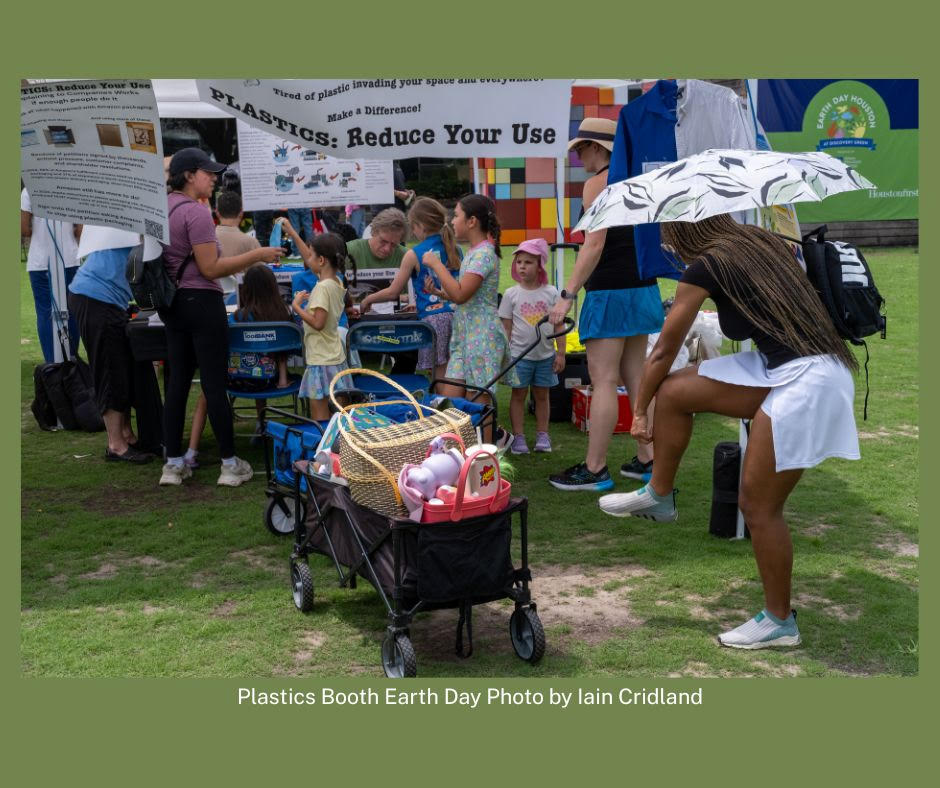
This Earth Day at a spectacular urban park in downtown Houston, somewhere in the neighborhood of 5000 people attended over the course of the festival. The participation would likely have been greater if it weren’t for the construction and road closings all around Discovery Green and the temporary closure of the METRORail due to planned maintenance. Earth Day these days is not a protest, it’s the anniversary of a protest, kinda like the Fourth of July. The visitors at this year’s Earth Day visited over 50 booths, including city and county departments showcasing some of their sustainability initiatives and environmental nonprofits educating about nature and various environmental issues. Though this Earth Day event was not a protest, we did attempt to educate about environmental issues and encourage action.
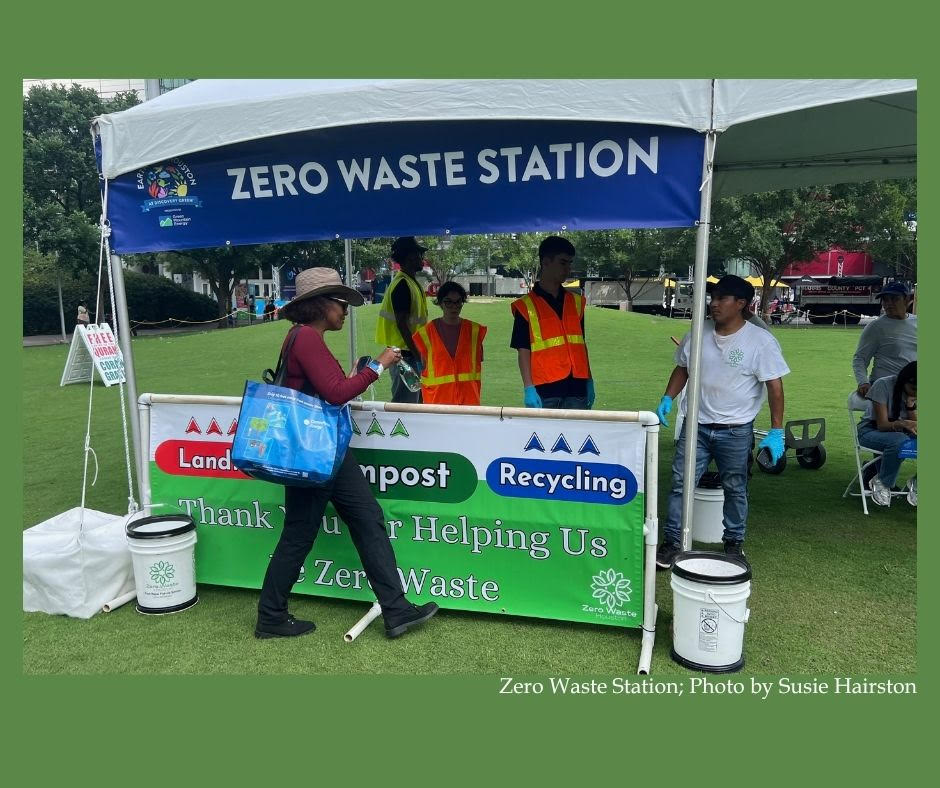
Citizens’ Environmental Coalition and our partners Zero Waste Houston, Discovery Green and University of Houston Downtown, were attempting to make this event Zero Waste as it had been for the last two years. A Zero Waste event is one where at least 90% of the waste is diverted from the landfill through composting, recycling and reuse. And we were set up to attain zero waste certification again with scales for weighing the different waste streams and waste sorting stations strategically located around the event that were staffed by Zero Waste Houston and approximately 100 volunteers from UHD led by Adriana Penabad-Galva, Sustainability Coordinator for UHD’s Center for Urban Agriculture and Sustainability. Ironically, after 2 years of zero waste certification, this year’s downsized event of ~5000 Earth Day visitors only diverted 79% of the waste (which is still pretty good). The previous two years, the Earth Day event had coincided with the Robotics Convention at the George R. Brown Convention Center, which swelled the number of attendees at our Earth Day event to approximately 30,000 people. We determined that the reason we did not achieve Zero Waste this year (are you ready?) was that the attendees from the Robotics Convention over-ordered and threw away massive amounts of food, which could be diverted and thus offset the items that had to be sent to the landfill. This year, Earth Day folks ate the food they bought, so there was not very much to be composted! The lack of food waste this year is actually a good thing as prevention of food waste and any waste on the front end is always the best option. If you cannot prevent the waste, then composting what you can and recycling what you can will minimize what is sent to the landfill.
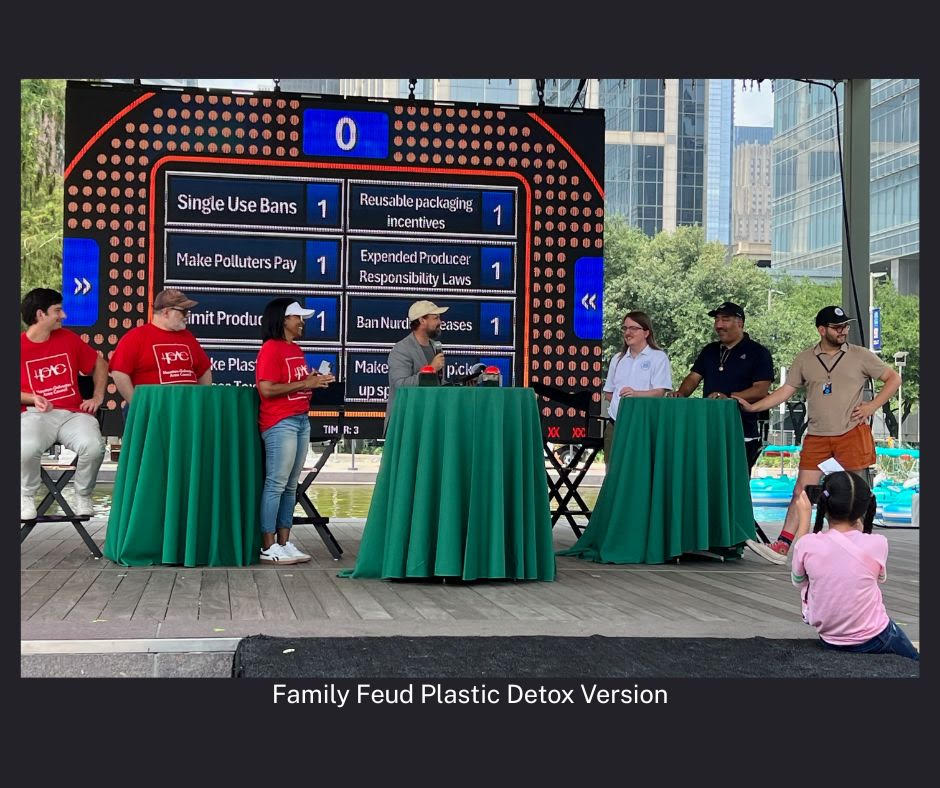
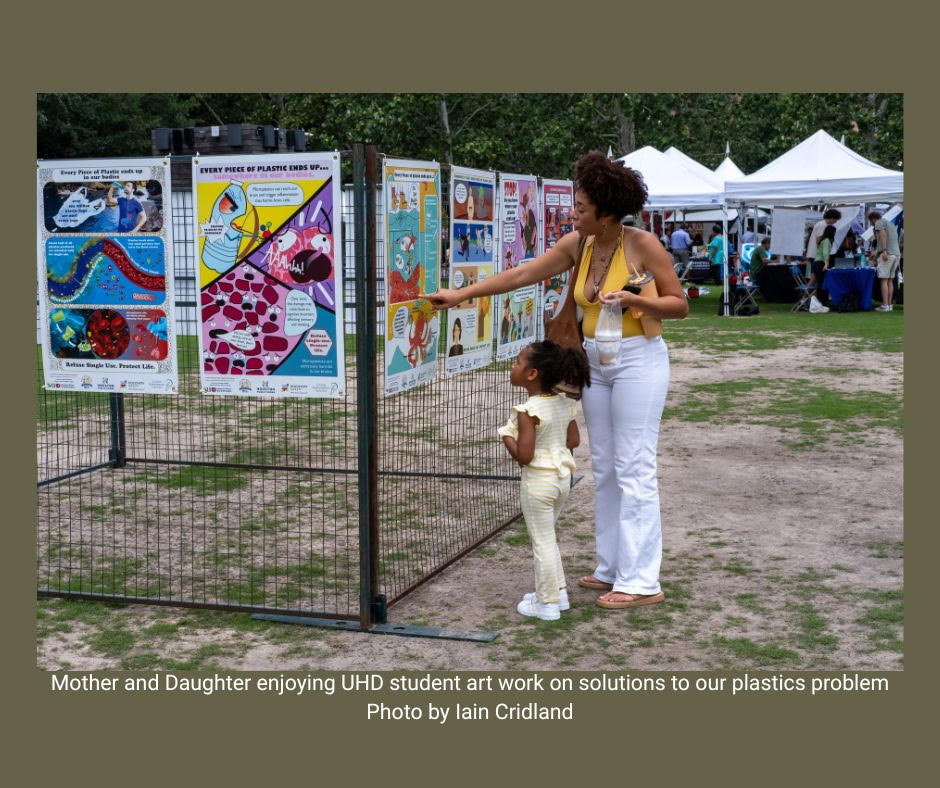
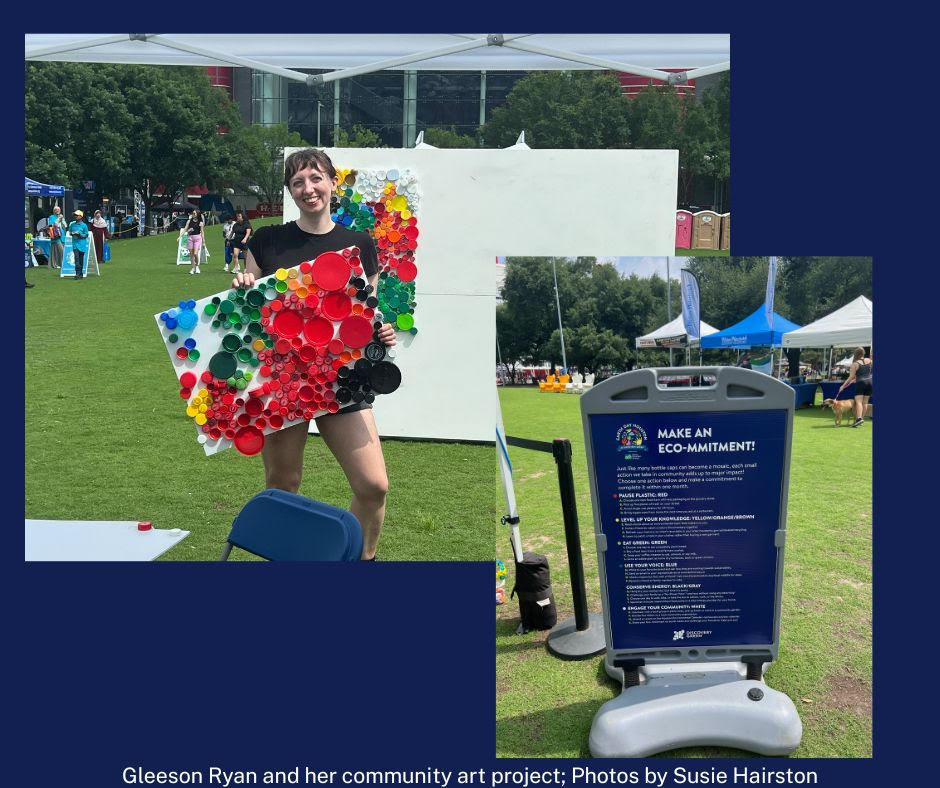
We staged a nifty environmental “Family Feud: Plastic Detox Version” on the main stage, Magpies & Peacocks held a fashion show of pieces made from recycled materials, University of Houston Downtown art students, led by Professor Natacha Poggio, showcased posters responding to the plastic crisis by demonstrating solutions, and artist Gleeson Ryan hosted an art engagement project for folks to commit to one small act of sustainability and then participate in creating a dynamic piece of community art consisting of multicolored plastic bottle & jar lids. The sustainability commitments, which ran the gamut from making more sustainable food choices, avoiding plastics, volunteering with environmental organizations, engaging in political action, and educating yourself about environmental issues included extremely doable things such as “choose the item with the least/most recyclable packaging for one food item you need at the grocery store or choose one day to eat completely plant-based.”
We also had some students surveying the crowd with single questions. One team reached 40 attendees, the next got to 70, and Victoria Tang from the Awty School reached 240 by herself! The questions were as follows: 1) What could YOU do to best help the Earth, then 2) What is the most environmentally conscious thing you regularly do? and Victoria was tasked with asking 3) What does the Earth need the most of right now?
Now for our interpretation of the myriad answers: Drumroll please….
- Question 1 Responses: 35% said Recycle, 10% said reduce plastic, and the rest were random/unrelated.
- Question 2 Responses: 37% said Recycle; 20%, Reuse; 10%, buy thrift clothing; 34%, random/unrelated.
- Question 3 Responses: 20% said Caring humans; 15%, Peace/Love; 12%, address Air or Water pollution concern; 11%, address Climate Change; 10%, implement better pollution control; 30%, random/unrelated.
I’m blown away with the results. Notice the number one individual response was recycling, which is not surprising, as surveys often show that recycling is the thing Americans most identify with sustainability. Sadly, we do not recycle very well. Also, recycling is incredibly end-of-pipe, and while doing it correctly and increasing the amount recycled would help somewhat, it doesn’t really solve any of our planetary problems, which need to be addressed on the front end – before the waste and pollution is produced. Oops, that sounded negatively judgmental, for which I apologize. The next most numerous responses – the world most needs caring humans and peace and love – I can certainly respect, but we can’t wait for those to happen. We have to act now, and recycling, even if Americans were good at it, is not nearly enough.
At least 10% responded to what the Earth needs with pollution control! Yay! That’s what initiated the original Earth Day! We have much better air quality in our cities than back then, don’t we? Too bad we keep dumping toxins in the water and are rolling back some of the regulations that have made our air cleaner!
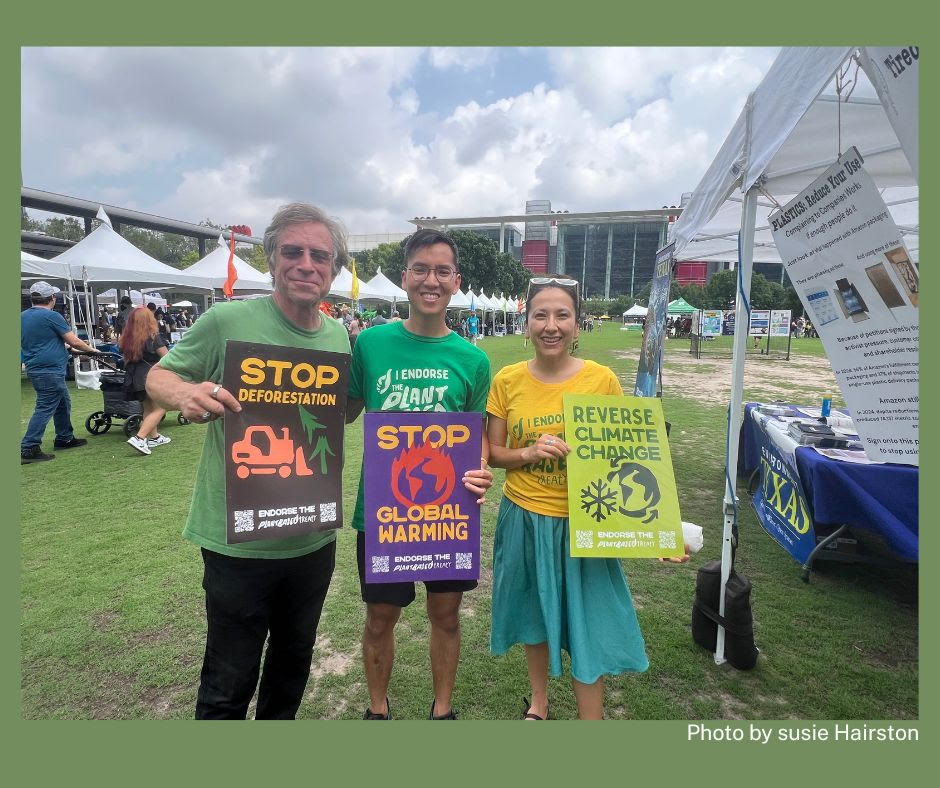
Perhaps we can start to reclaim Earth Day by rethinking our relationship with the earth. I recommend reading Braiding Sweetgrass, a brilliant and upbeat book by an indigenous American, Robin Wall Kimmerer (which we discussed in our CEC Every-Other-Month In-Person Environmental Book Club). She talks about having gratitude for what the Earth makes available to humans and how breathtaking this planet really is. It’s a great way to celebrate Earth Day and inspire us to action. In fact Robin has started a movement: Plant, Baby, Plant. Check it out.
So yes, let’s celebrate the earth and the accomplishments we’ve made in reducing pollution and conserving our environment, but let’s also realize that the gains we have made are being rolled back by the current administration, making our water and air less clean, and in the interim between the first Earth Day and now, new toxins and threats have reared their ugly heads (PFAS, microplastics . . . the list is exhausting). We and the Earth still need to be protected: We need to reclaim Earth Day and every day as days of protest and action.