Plug-In Solar: Key Takeaways from Our September Panel
By Ngoc Nguyen and Mia Aguilar
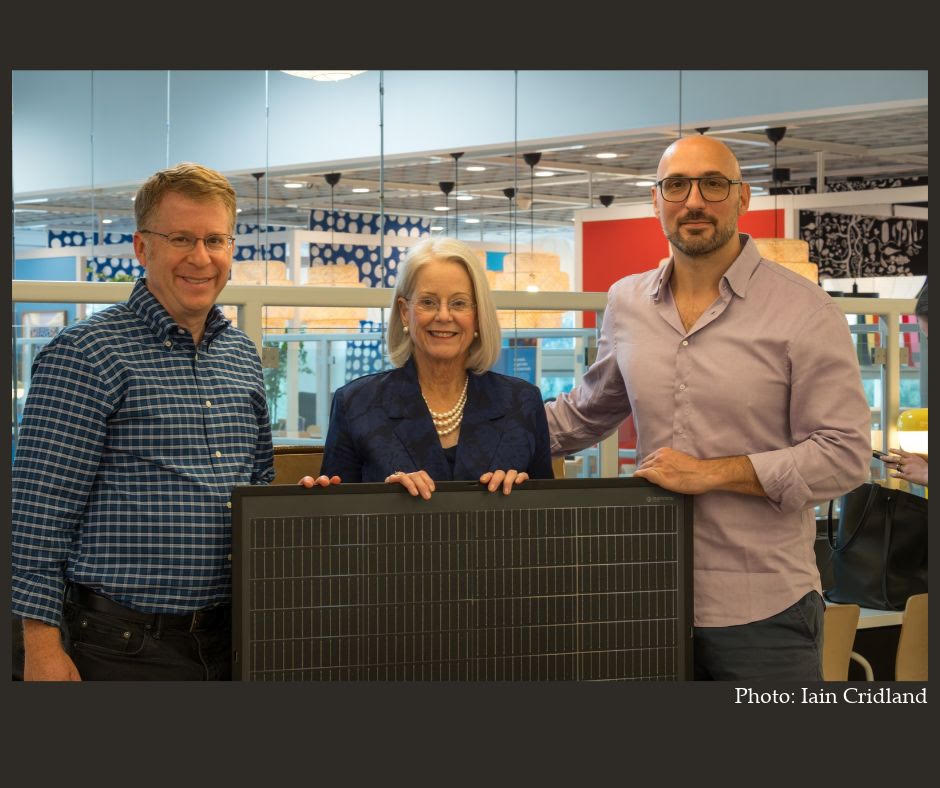
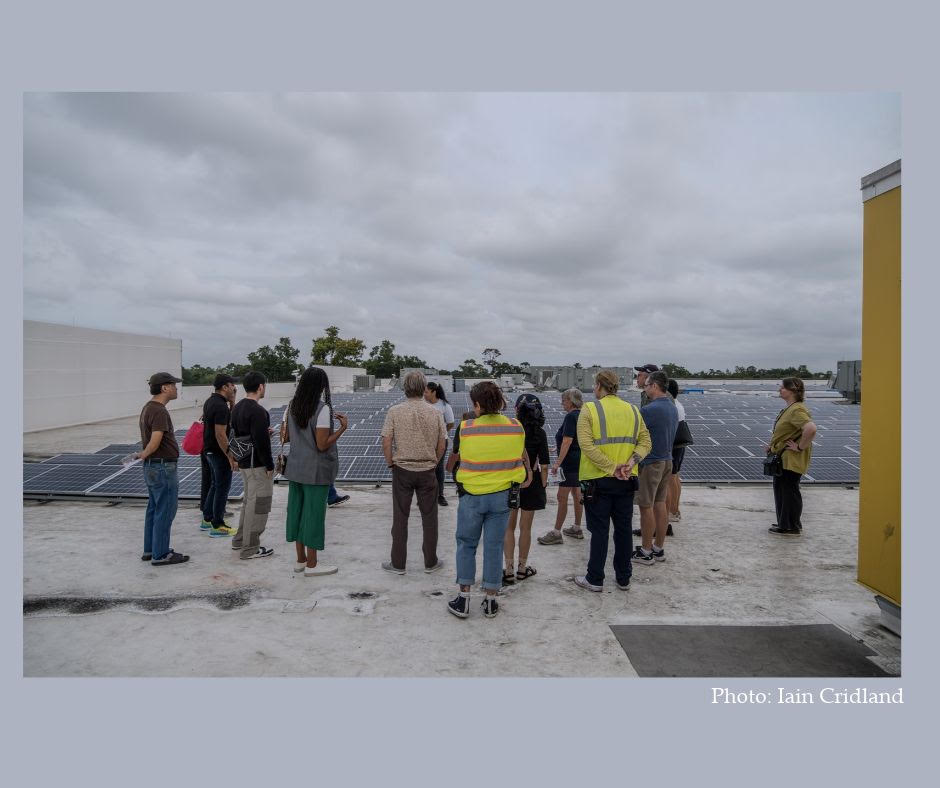
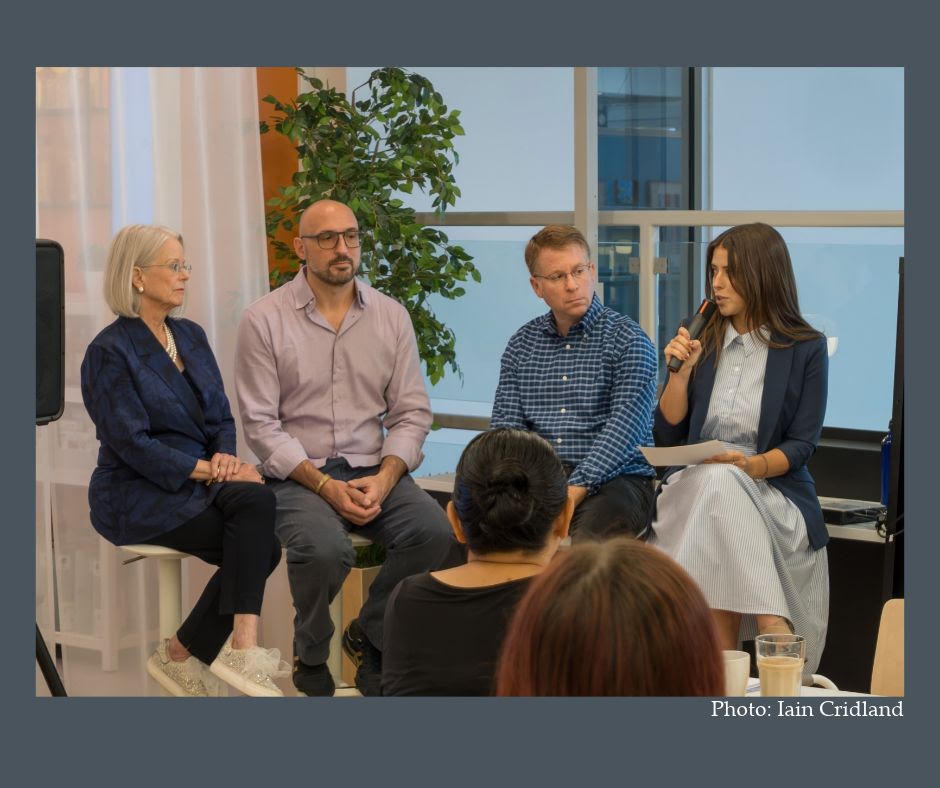
On September 17th, CEC and Houston Renewable Energy Group (HREG) jointly hosted “Plug-In Solar: Power Within Reach” at IKEA Houston, where attendees explored how this emerging technology could make solar power more accessible to a wider range of Texans. The event, one of the many Houston Energy & Climate Week happenings, featured panelists Pete Parsons, Executive Director of Texas Solar Energy Society; Rice University Professor Daniel Cohan, Ph.D.; Stephan Scherer, Managing Director and Co-founder of Crafstrom Solar; and moderator Adriana Penabad-Galva from HREG. Prior to the panel discussion, IKEA held tours of their impressive rooftop solar array, featuring 1,913 photovoltaic (PV) panels with a 1,193 kWh electricity generation capacity. The panel discussion covered everything from how plug-in solar works and potential household savings, to safety, regulation, renters’ access, and the future of a more decentralized energy system.
Thank you to the German Consulate in Houston for sponsoring this event. Germany offers a compelling example of how quickly plug-in solar can move into the mainstream. As of August 2026, more than 1.5 million plug-in solar systems were registered in Germany, representing more than 1.6 gigawatts of capacity, enough to power about 1.2 million American homes, according to Germany’s Federal Network Agency, the Bundesnetzagentur (BNetzA). Germany’s rapid growth has been supported by simpler registration requirements, clearer technical standards and policies that make small solar systems easier for renters and homeowners to install.
Five key takeaways from the panel discussion:
1. Plug-in solar can make solar more accessible.
Unlike traditional rooftop solar, plug-in systems are smaller, modular, and designed to work with existing home wiring. Stephan Scherer pointed out that plug-in systems are a particularly appealing option for renters, people in temporary living situations, or households that may not be able to install a conventional rooftop system. The systems can also be expanded over time and taken with you when you move. Dr. Cohan described plug-in solar as a potential entry point for people interested in learning more about sustainable energy and becoming more involved in their own energy production.
2. Energy efficiency comes first.
One of the messages most emphasized in the discussion was that households should start with energy efficiency. Pete Parsons explained that reducing energy demand and use can help homeowners get more out of a smaller solar system. Dr. Cohan shared a personal example of how efficiency improvements he made allowed his home solar system to go from supplying 50% of his home’s electricity needs to 90%. Examples of improving your home’s energy efficiency include changing out incandescent bulbs for LEDs, closing shades on hot summer days to keep the sun from heating up your house, adding or upgrading insulation, and replacing old appliances with Energy Star rated appliances.
3. Safety is an important part of the design.
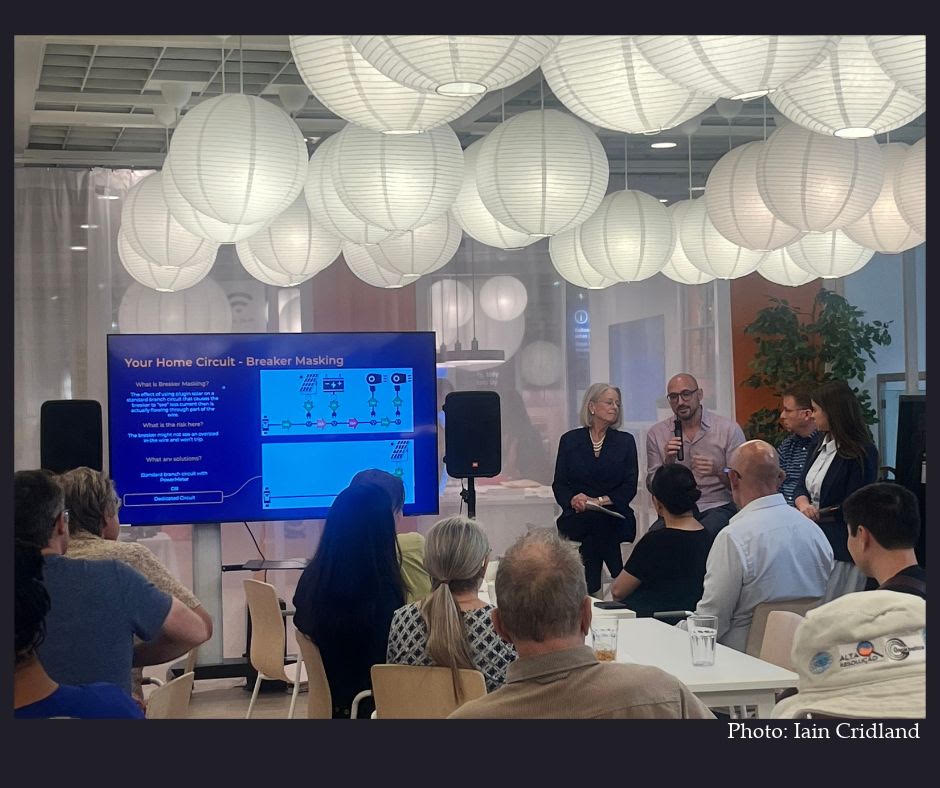
Scherer addressed concerns about plugging solar equipment into household circuits, including the risk of overloading a circuit. In order to avoid these risks, systems can incorporate dedicated circuits or monitoring equipment that measures energy activity and limits how much power is supplied through the connection. The discussion emphasized that safety considerations are addressed through thoughtful system design and appropriate standards.
4. Plug-in solar could offer new options for renters and households facing rising electricity costs.
Because plug-in systems are smaller, can be purchased one panel at a time, and do not require a solar installer, they make solar more affordable for people who have historically had fewer options. Parsons explained that using solar generation from an inexpensive plug-in solar system during the day can help offset electricity consumption at times when households are running appliances such as washing machines and A.C. Parsons thinks that traditional solar installations may also become more affordable, pointing out that the costs of personal systems will only decrease as more households adopt solar and as “soft” costs are addressed in the upcoming legislative session. The U.S. Department of Energy defines soft costs as “the non-hardware costs associated with going solar,” i.e not the panels, microinverters or wiring. “These ‘soft’ costs include permitting, financing, and installing solar,” as well as the business expenses solar companies incur. And these “soft” costs are passed on to the customer.
5. Small-scale solar could play a role in a more decentralized grid.
The conversation also looked beyond individual households. If more Texans generate some of their own electricity, distributed solar could relieve strain on the grid and potentially help address congestion and growing electricity demand.
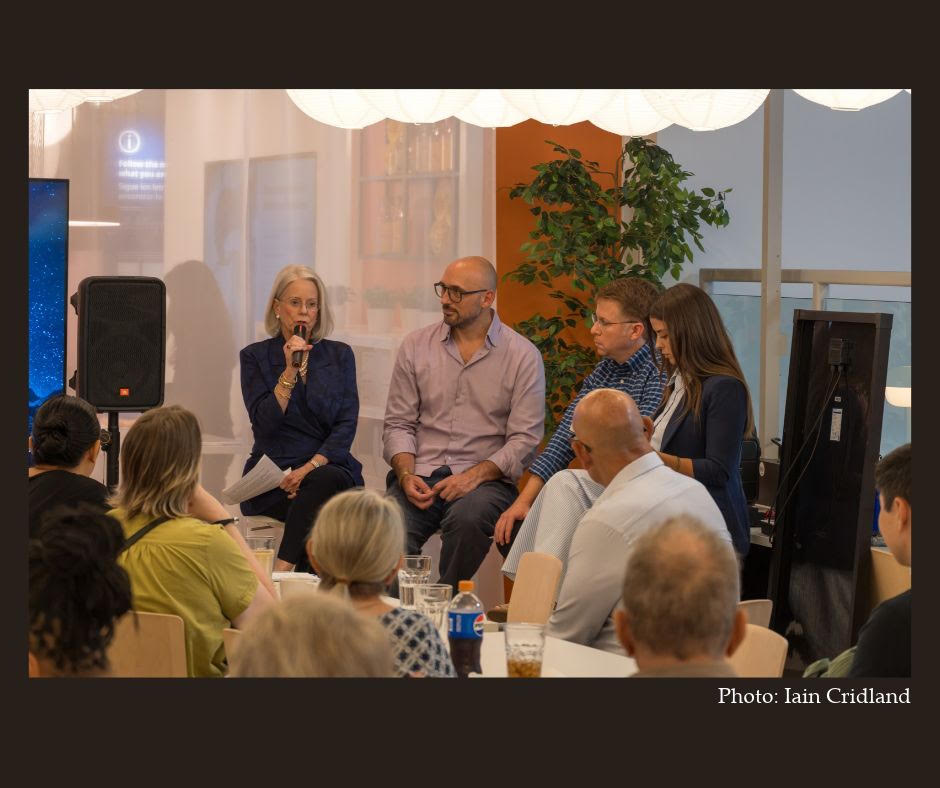
Panelists concluded their discussion by illustrating their vision of what a successful plug-in solar market would look like. Parsons said she would like to see 10% of Texas households using plug-in solar. In addition to seeing plug-in solar as an accessible way for Texans looking to adopt sustainable energy, Dr. Cohan sees it as a gateway for Texans to start adopting other environmentally-conscious practices. Scherer recounted numerous phone calls he has received from plug-in solar users, raving about the savings they’re obtaining from their systems and expressing general satisfaction with solar energy. He wants to grow a community around emerging personal solar technologies and further foster satisfaction with sustainable options.
As the panelists discussed, plug-in solar systems are an excellent sustainable energy option for those looking to incrementally transition to solar energy, establish their own self-reliant electricity source, lower their energy bill, and ultimately, lower their household’s carbon footprint.
References
“Solar Soft Cost Basics.” U.S. Department of Energy
Resources
Install Your Own Plug-In Solar:
Help Advocate for More Solar in Texas:
Houston Renewable Energy Group (HREG)
Solar United Neighbors of Texas
Energy Efficiency and Conservation