Meet Andy Escobar, Campaigns Manager for The Coalition for Environment, Equity, and Resilience (CEER)
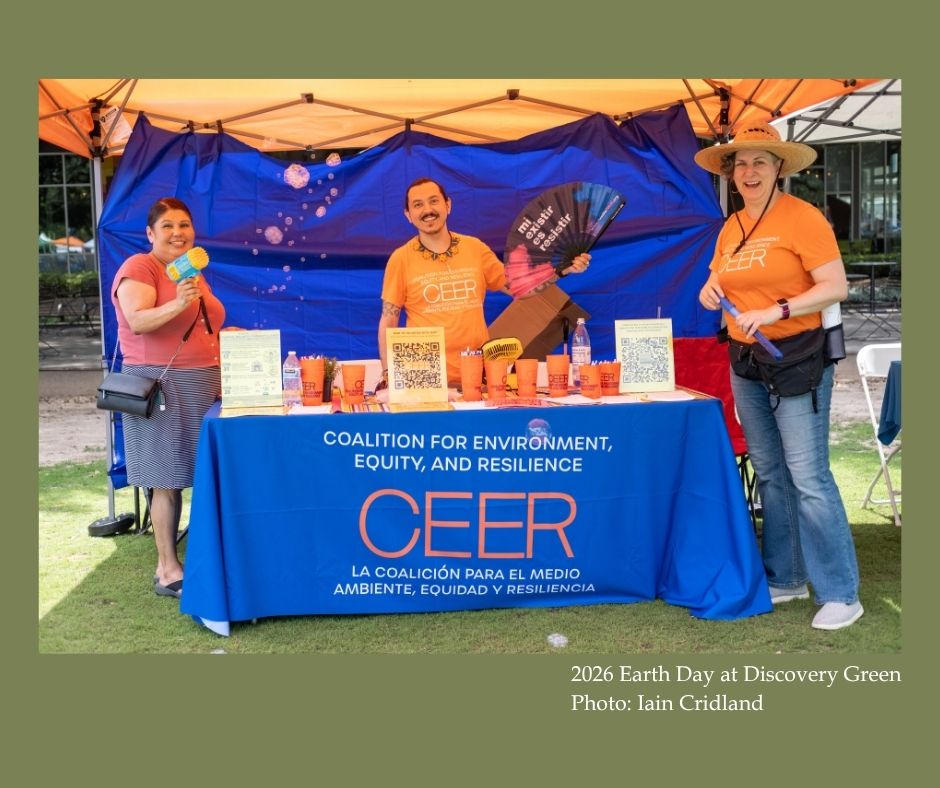
by Susie Hairston
As part of our ongoing series introducing our readers to some of the environmental champions who work tirelessly to safeguard our environment and health in the Houston area, I had the privilege of talking to Andy Escobar, CEER’s Campaigns Manager.
Andy will be celebrating his 5th year anniversary with CEER in November. He started as a senior community organizer for CEER’s regional work in surrounding counties. A year or two after that, he was switched to senior campaigns coordinator. A year and a half to two years later he transitioned to his current role as Campaigns Manager, overseeing many of CEER’s projects.
CEER is a great fit for Andy. It is a coalition of 30 plus nonprofits that are working towards making the connections between pollution, place, and public health through environmental justice and climate action. Andy explained, “Environmental justice is our north star. We look at things in a holistic way. This work is really important to me both personally and professionally, and I am lucky to get paid to do it. When I was being interviewed by CEER, I had a competing job offer, but I went with CEER because I was moved by the level of community engagement. I was interviewed by people in the communities I was going to be engaging with. I love that we do that at CEER. In the past, I have only ever been interview by the staff.”
Andy says of his role at CEER, “I call myself the glue that holds things together, the jack of all trades, maybe master of none.”

I ask him to describe a day in his life at CEER. “Typically, it’s keeping tabs on different buckets that I have my hands in, but making sure that the other buckets that I’m not in charge of are also still being maintained. I lead the implementation of the Harris County Justice Plan — we are the county’s Community Based Organization (CBO) partner. My role is to lead implementation of the plan forward. I have to check in with the County’s sustainability team – Lisa Lin or Pilar Fuentes or someone else from one of the precincts. We also have our resilience hub work — establishing the Carl Walker Jr. Multi-Purpose Center as a resilience center, holding office hours there every Tuesday from 10 – 2. I work with our partners to do resilience programs. I send texts, make phone calls and look at my emails. I drive around to attend community meetings or co-work. I get together for lunch with partners or community members. I support my CEER colleagues with their projects – Steph with her water justice work and Carmen with her climate justice organizing.” He also gets pulled into donor meetings with Executive Director Stefania Tomaskovic.
Despite how full his days are, Andy points out, “I have flexibility — if I have a personal appointment — I can work it into my day. Working at CEER has allowed me to have that work/life balance that is so important.”
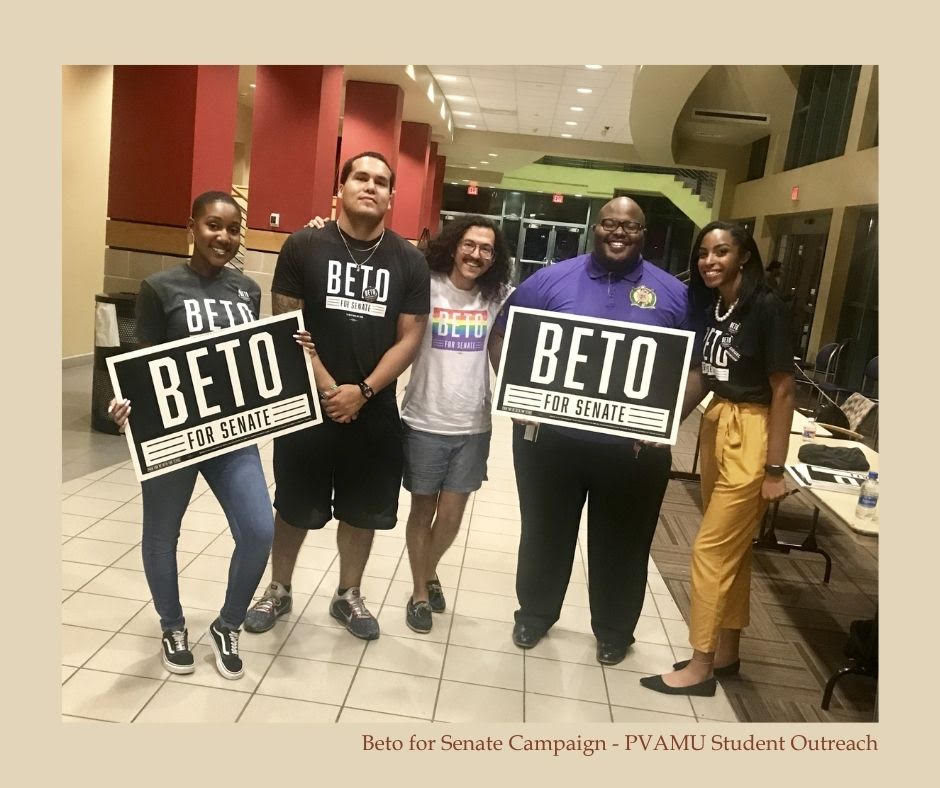
Looking at Andy’s resume, it might appear that he came to environmental work through social justice. He worked on BETO’s senate campaign when he was in college and has worked on reproductive rights and gender equity and tenant rights. But it turns out that since he was very young, he has cared deeply about the environment. He explained, “Since I was a small child I was drawn, attached, connected to the natural world, animals, dinosaurs. There are pictures of me holding onto dogs and playing with animals. My love of nature was always part of my identity. I was president of my recycling club and instrumental in getting an AP environmental studies class in high school. At age 14, I decided to cut out meat from my diet, and that was controversial in a predominantly Mexican household. It was almost like coming out of the closet. I started off with the animal welfare issues, and I stayed for the environmentalism. I wish more people would make those connections between our food and the harms it is doing to our planet. I have always been alternative — my family always said ‘you’re the hippie of the family.’
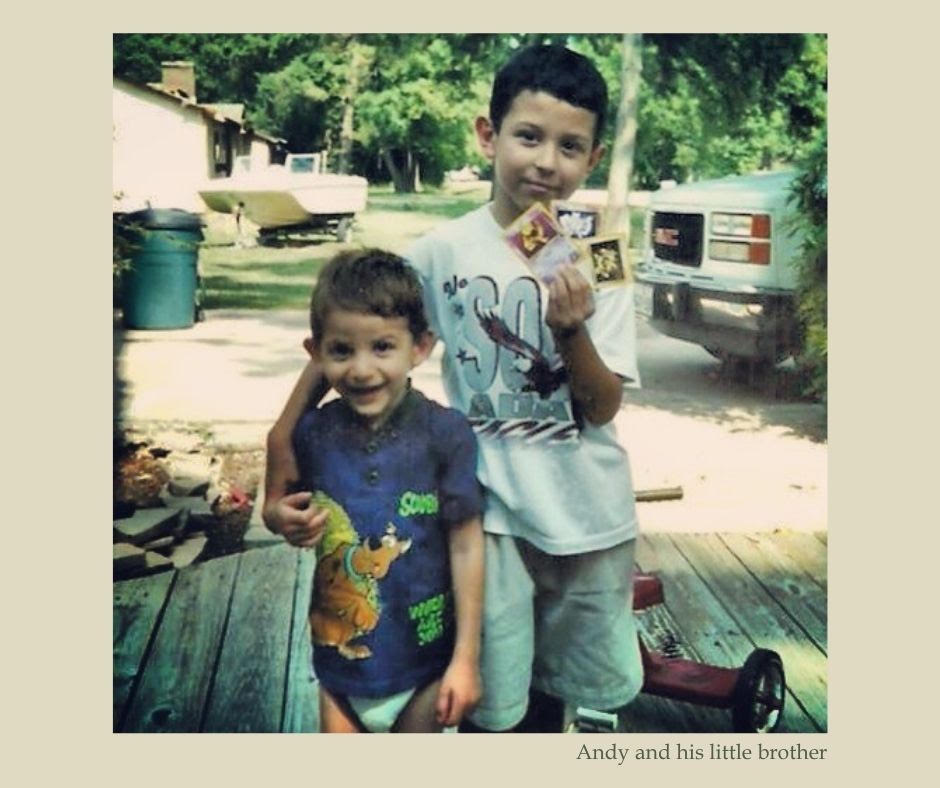
Andy grew up in Northwest Houston in the suburbs in, as he described it, “a stereotypical 1990s working class family. What was different for my family was I had a stay at home mom, and I knew that was not the norm. She did not have a paying job. Her job was to be my mom. We lived a comfortable working class lifestyle, but it was because of all the sacrifices my parents had made — they made sure we were raised in a good community with a good school district.”
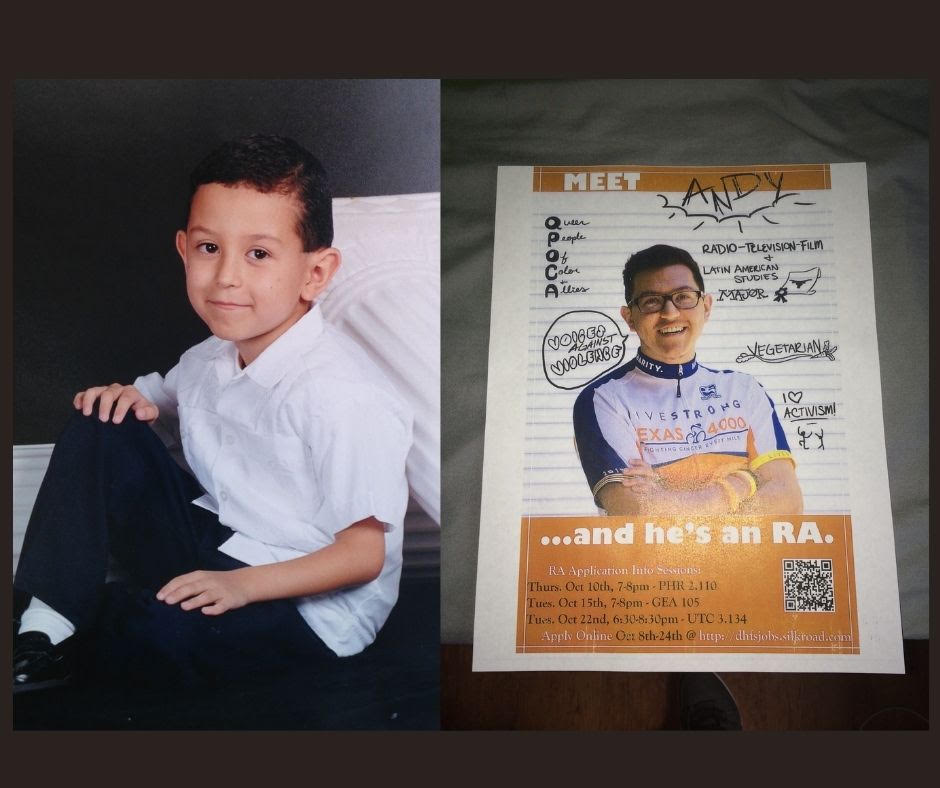
Andy became passionate about social justice when he left home for college: “It was in undergrad that I became really connected to social justice, anti-oppression, and activism. It took me going to college and escaping my bubble and learning about the world at large to make me realize in my first semester how ignorant I was about systems of power, and I am so glad: it hit me like a ton of bricks. It really solidified my understanding of why so much of my life had felt like a struggle. It opened my world completely and changed my life for the better.”
Already an overachiever in high school, Andy entered college as a sophomore due to college work he’d done in high school, and AP and dual credit courses. He continued overachieving in college by taking on three majors. He was accepted to the very competitive tv and film school in 2011. He told me, “It absolutely was because I talked about my desire to tell Latino Hispanic stories in film.” In addition to the film major, “I gravitated to Latin American studies because I was interested in indigenous peoples. I studied history of Mexican film – integrating those two majors,” but by his third year, “I was like — actually this isn’t really doing it for me.” He’d taken some women’s studies classes, and he loved feminism and anti-oppression and gender, so he added women and gender studies as a 3rd major. I just extended an extra semester. I graduated in 4.5 years.”
These three majors have informed his work and life because “They gave me a strong critical lens. I am able to walk into a room and analyze power dynamics – I would see a lot of men who always talk and women who never do, and a lot of white people who always take up all the space. It has sharpened a great critical perspective in me and allows me to meet people where they are. That perspective combined with the compassion and altruism instilled in me by my parents allows me to integrate heart and charm and lead with kindness and vulnerability.”
Going away to college is what indirectly led him to be an environmental justice advocate because it was when he was in college that he realized he had grown up on a Superfund Site.
When I was home on break from college, my mom would say, ‘Oh, we got this letter in the mail,’ and I would wonder ‘why is the EPA sending us a letter?’ My 2nd or 3rd year in college, I remember seeing one of the letters. I read it, and it was a report that said you need to stop drinking your water. The letter was talking about Bell Dry Cleaners, and I remember it — it was across the street — It was our story I was reading! Until reading that letter, I had not even realized we had been studied and researched. There was a subcategory in the research – those that were agreeing to be tested and homes agreeing to be connected to the public line. There was an asterisk — ‘this home has refused to connect to the public line because they only use water for bathing and washing. It says they don’t use the water to wash or cook.’ I realized – ‘That’s our house!’ In the early 2000s, we completely stopped using the tap water and transitioned to filtered water and then transitioned to making a weekly trip to fill up 5 gallon jugs at one of the water mills. It was a norm. I never really questioned it. It was only when I was in college that we stopped brushing our teeth with the tap water.”
Andy had grown up on the Jones Road Plume, which was contaminated with PCE and TCE from Bell’s Dry Cleaner, which had operated near his house from 1988 to 2002. In 2003, though Andy, then a child, didn’t know it, the Jones Road Plume was designated a Superfund Site.
Once Andy did find out about it, he became aware that though the EPA provided a remedy by connecting a water line to White Oak Bend MUD (Municipal Utility District) so that houses whose water wells were affected by the plume could connect to the uncontaminated public supply, the remedy was unjust. For many of the families in his neighborhood, including his, one of the selling points of the neighborhood was unlimited well water access. Now, after a company had poisoned that water, they were being told that if they wanted safe water, they would have to not only pay for the water from the MUD but pay 1.5 times what people in the MUD were paying since they did not pay taxes to the MUD district. Andy’s father did not want to connect to the public line.
Andy attended a Texas Health And Environment Alliance (THEA) meeting about the plume and told them, “‘I lived there — that’s my house’. So they said I could do organizing around the Jones Road Plume.” Since then, Andy has talked to Precinct 3 Commissioner Tom Ramsey and State Senator Molly Cook. “ It might be possible to put forward legislation where our area can get annexed to the MUD. There should also be an alternative where homes on a Superfund Fund site have access to clean water without having to pay for it.”
“That’s why this is personal to me. I feel passionate about the injustice done to my family. They saved up for years, lived in a trailer to save money to buy this home in the nice neighborhood. This is a predominantly upper middle class white retired people community — even in this area, we were not spared. My family fell through the cracks. It makes me really upset — both of my parents have had cancer. My aunt who lived with us for 16 years also had cancer.”
“My mom and my aunt both got breast cancer. My dad got oral cancer. My parents moved in in 1993 and were drinking the water up until the early 2000s when Bell Dry Cleaners went bankrupt and the EPA sued them.”
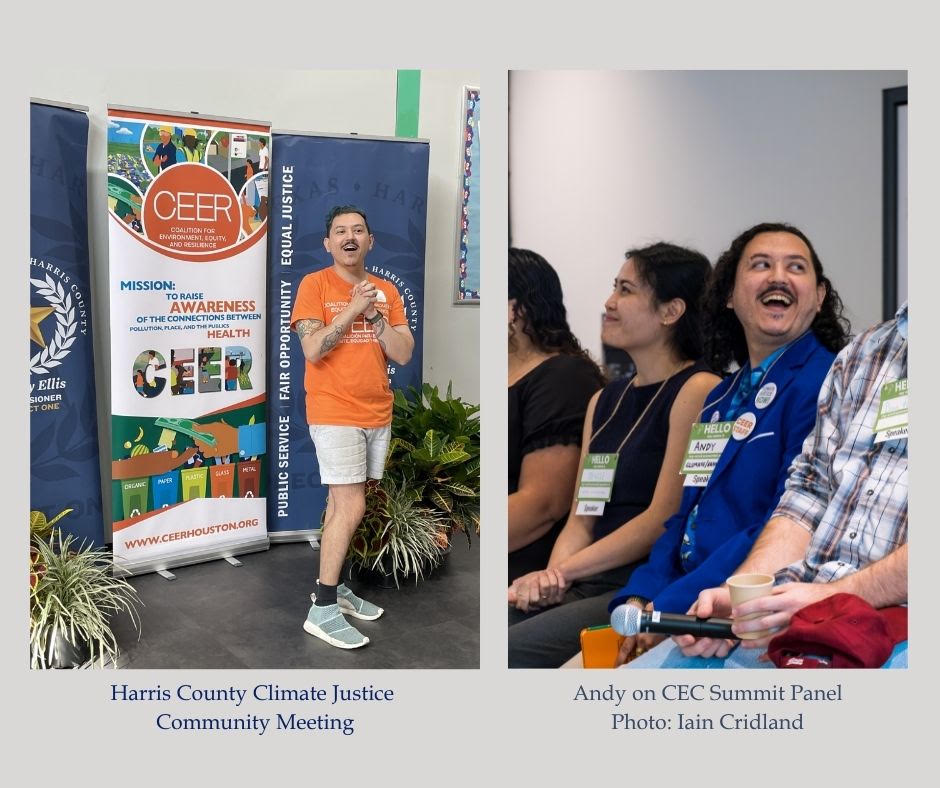
I asked Andy which successes he has had in his work that he is most proud of, and he responded, while working with CEER, “the clear one, that I sometimes take for granted, is that we were the first county in the country to adopt a Climate Justice Plan. We are in the oil and gas capital of the south, and yet we are pursuing climate justice. The plan is not perfect; it’s not set in stone, but it is moving us in a symbolic and practical way in the right direction. It is the people’s plan, and parts of it are dreams we want to see happen that seem unfeasible. That is one thing I am super proud of at CEER.”
Connected to this, is that “we have built this infrastructure of community leaders across the region — people who now identify themselves as climate justice leaders. Through cultivation, disaster recovery support — we helped create a space where they can come together and come into their power. We have helped uplift people who already had power in their communities so they can raise their voices through the coalition.”
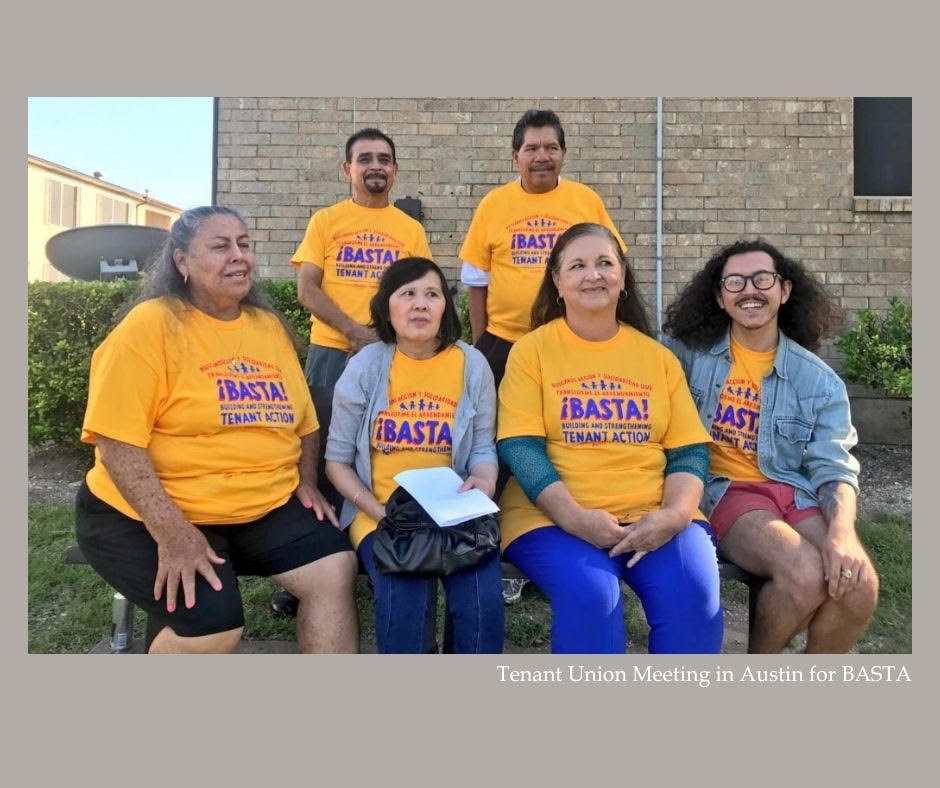
Something Andy is proud of in his pre-CEER work was a guide he worked on when he was a tenant organizer in Austin. “We created guides to help tenants request repairs in a legal way – send a letter to your landlord. We used pictures and graphics in English and Spanish. It was my first language justice bilingual document, and they are still using that today. I was really proud to see that. It feels good to know that it’s a tool that people across the state are using, and it’s really practical. Building practical solutions is really important to me.”

When Andy isn’t working, he watches films and tv. “It’s a really big pastime of mine, and it helps me stay grounded during these difficult times. My treat is RuPauls’ Drag Race. I’m an AAA24 club member and get free tickets to A24 films. I collect physical media as well. I have a lot of QUEER films. I also organize around LGBTQ issues — I’m part of the Houston chapter of Impulse, which is a social advocacy group which connects, engages, and supports gay/bi/queer people across the Greater Houston area.”
And of course, Andy, who came to environmentalism through animal welfare tells me, “I have two baby girls – a chihuahua named Sirena, which means mermaid in Spanish, and a long-haired mini- dachshund named Piña, which is pineapple in Spanish. I also have tropical fish and African Cichlids.”