Yes, You Should Recycle, but NO, it is not Enough

America Recycles Day (11/15/2025) posts and articles are usually all pep rallyish — “Hip hip hooray for recycling!” This one will be an anomaly.
Despite decades of recycling and recycling education, according to a study by Keep America Beautiful, the national recycling rate is only 32% despite the fact that a 2020 survey by the Recycling Partnership showed that “85% of Americans strongly believe in recycling.”
More importantly, 3% of the waste produced in the US is MSW (Municipal Solid Waste), the kind discarded by individual households; the other 97% is industrial waste. This basically means that even if every household in America recycled every item that was recyclable from their household, it would only make a small dent in the bigger waste picture.
This is not to say that you should abandon recycling. Recycling has a place in our ongoing attempt to make our planet and us healthier, but that place is behind, way, way behind, reducing and reusing. Reducing consumption, and thus waste, and convincing others to do so as well, is the most important thing you can do to improve our waste problem.
That said, every bit does count. And the more that is recycled, the less virgin material is necessary to make products, and the less industrial production and thus industrial waste there is. I will come back to reduction in a minute, but first let’s go over what can be recycled in your curbside bins.

What should I recycle?
Recycle cardboard (emptied of all packing materials), paper, aluminum and steel cans (emptied of all liquid/food), and glass bottles and jars (emptied of all liquid/food with lids off). In our area, cartons (milk cartons, soup boxes, and juice boxes — not the pouches) can be recycled as well when they are empty and rinsed out. There are facilities that can process these items and markets where they can be sold, and they do get recycled. Aluminum usually sells for the highest price per ton. And, items made from recycled aluminum require 95% less energy to produce than aluminum made from virgin materials. So it is definitely worth it to retrieve and recycle aluminum cans you find on the street or in a public trash can.
Recycling cardboard, paper, aluminum and steel cans, and glass bottles protects the environment: fewer trees get cut down when paper is recycled, less raw material is mined for when aluminum and steel cans are recycled, etc. Also, in all cases, less water and energy is used to make products from recycled material than from virgin material.
Plastic items deserve multiple Dickensian length books devoted to them as they have a Dickensian story to go with them. But for now, here is a quick summary of the issues with plastics recycling.
Early on, the plastics industry realized that recycling plastics was never going to work, but they promoted it anyway so they could keep increasing plastics production by convincing consumers that it was consumers and their failure to recycle that was the cause of all the plastic waste blowing around on roadsides and beaches, not the flooding of our world with plastics by industry.
Despite over 50 years of industry’s touting of recycling as the answer to the glut of plastics, decades after plastic recycling began, only 5% of plastics gets recycled in the US.
Almost every single piece of plastic ever produced is still around somewhere, either wrapped around some poor sea turtle’s neck in the ocean or snowing down on the arctic in the form of microplastics or in the placenta of some pregnant mother out there.
Plastics do not biodegrade — they hang around breaking down into increasingly smaller pieces, becoming microplastics and nanoplastics. They fill our oceans, our air, our soil and us. On average, we ingest about a credit card’s worth of these plastics per week.
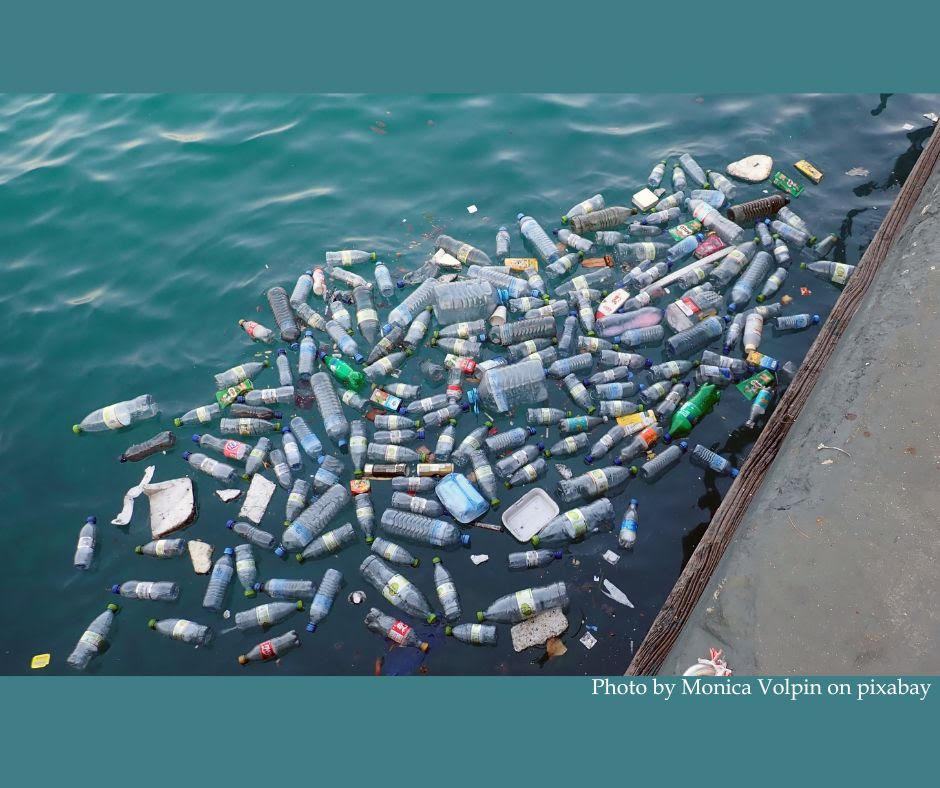
Some plastics can be recycled. #1, #2, and #5 plastic bottles, jugs and jars (do not put plastic bags/plastic film in your curbside bin) currently have a market in the Houston area and are being recycled. Numbers 3,4, and 7 plastic containers rarely have a market and often end up in the landfill, or worse, in an incinerator, despite the fact you put them in your recycling bin. #6 is not recyclable and should definitely be avoided.
Because plastic bottles, bags, etc. shed microplastics and because recycling plastics produces a lot of microplastics, some experts are beginning to think it would be better to avoid plastic containers and packaging, and dispose of all single-use plastics that you can’t avoid in the landfill to stop the release of microplastics into the environment caused by plastic recycling and thus slow the increase of microplastics in our environment.
Others think that despite the fact that microplastics are harmful, halting the recycling of plastics will not eliminate them from our environment as they will still be released by all the plastic items we are using every day. They think that the benefits of recycling plastic, namely that it reduces the need for more fossil fuel extraction and plastic production — both of which are damaging to our health and the health of our planet — is worth the addition of more microplastics to an already microplastic saturated world.
I am currently still recycling plastic bottles and jars in my bin and dropping plastic film off in the collection bin at Krogers so they can send it to Trex to be recycled into plastic decking. However, I am worried about the fact that making plastic bags into decking is filling our world with more microplastics since the deck sheds microplastics as it weathers. Sometimes it is hard to know which of several bad choices is the lesser of two evils. Instead I focus on avoiding plastics as much as possible so I don’t have to make that choice.

Regardless of what conclusions you come to about what to do with plastic discards, recycling cardboard, paper, cartons, steel and aluminum cans, and glass bottles and jars definitely has advantages that makes it worthwhile to do so.
If you are going to recycle, do it right. Unfortunately every locality has different rules due to the different recycling technology and markets available to them. Familiarize yourself with your local recycling guidelines. Click on your city to find out what should go in your curbside bin: Houston, City of West U, City of Southside Place , and Bellaire.
When in doubt, throw it out. Contamination can lead to whole loads of otherwise recyclable material getting landfilled. Though you may wish that your garden hose is recyclable, it is not. Do not put it in your recycling bin.
I teach a master recycler class, and I tend to be a perfectionist, but I have come to realize that getting bogged down in recycling minutia rather than just sticking to the six and teaching others to do so as well, is wasting time better spent working on things that can make a larger difference such as taking action to turn plastic production off at the tap rather than trying to clean up the mess made by it after the fact.
The only real way to tackle our massive waste problem is on the front end, by reducing consumption, and thus production of new materials, and by ensuring that the materials that are produced are designed to last a long time, are made from non-toxic materials, and will be recyclable or biodegradable at the end of their lifespan. Stop before you buy and carefully think about whether you really need that item; if you do, think about whether you could get it used instead, or, better yet, could borrow it. Learn about the ongoing negotiations on the global plastics pollution treaty that many environmental organizations, such as the World Wildlife Fund are involved with. Volunteer with and support local organizations who are trying to address the plastic pollution problem such as Air Alliance Houston, Texas Campaign for the Environment , and Environment Texas. Encourage companies whose products you use to reduce their packaging, minimize their use of plastics, and design their products so they do not end up as waste at the end of their lives.
Yes, you should recycle.
No. it is not enough.
Resources and references:
https://recyclingpartnership.
https://recyclingpartnership.
https://www.beyondplastics.
https://www.beyondplastics.
https://www.epa.gov/
https://www.thenation.com/
https://www.washingtonpost.