Spring Cleaning 2: Household Hazardous Waste
by Susie Hairston
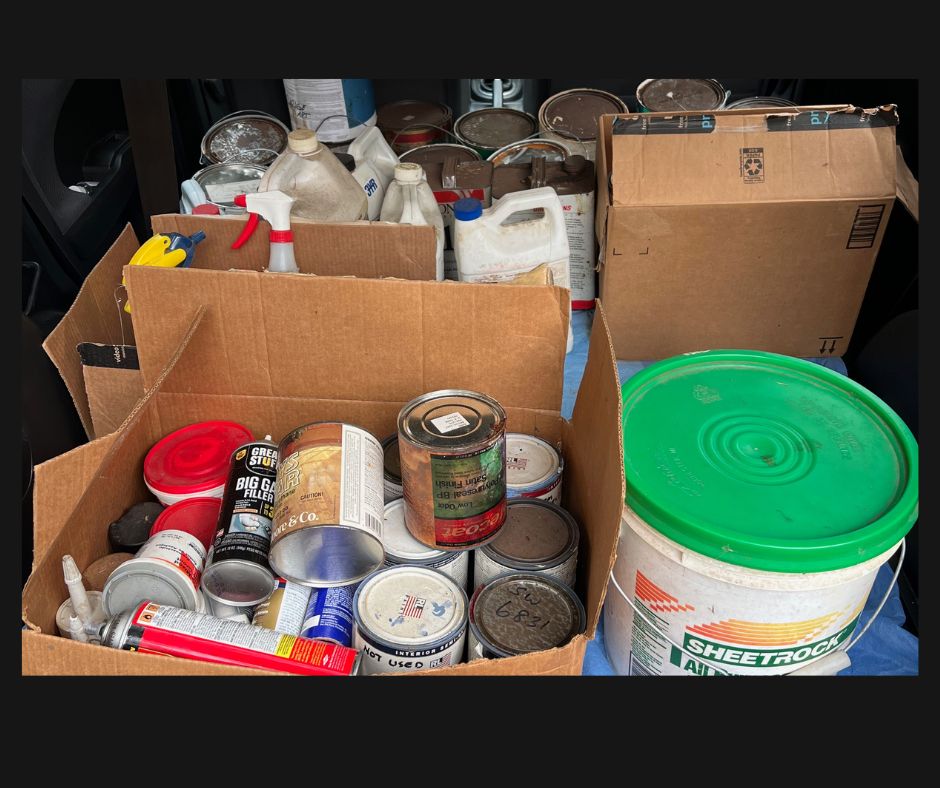
At this time of year, a lot of people are cleaning out their houses and garages. Often, lurking in our garages, underneath kitchen and bathroom sinks, and even in our living rooms, are products such as oil-based paint, roach spray, and non-functioning televisions that we no longer want, but are hazardous to humans, the environment and animals if not properly disposed of. (Makes you wonder why we had/were using some of these products to begin with — but more about that later.)
What is Household Hazardous waste (HHW)?
HHW is a group of household products that can be unsafe if not disposed of properly either because they are toxic or flammable or explosive or all of the above. They are things like automotive products, household chemicals, paints and solvents, pesticides, fertilizers, pool chemicals, fluorescent bulbs, lithium batteries, aerosol cans, and electronics.
Why not just throw HHW in the trash?
First, HHW is so named because it is, in fact, hazardous. Improperly disposing of HHW by putting it in the trash is dangerous — putting sanitation workers in jeopardy by causing fires in trucks, recycling facilities, and landfills and threatening the health of all humans and wildlife by seriously and irrevocably contaminating soil and water. HHW should never be poured down the drain, flushed down the toilet, dumped on the ground, or put in the trash.
Pesticides and household cleaners get into the soil and groundwater, killing wildlife and harming humans. Things like pool chemicals are extremely flammable and can start fires in trash trucks that can severely injure and kill the staff on the truck and damage the extremely expensive equipment. Electronics contain all kinds of toxic heavy metals (mercury, lead, etc.) and flame retardants that leach into the soil and groundwater when dumped in a regular landfill rather than being properly recycled and contained.
A hazard that many are not aware of is an aerosol can that still has material in it, even if the material is something like shaving cream that is not hazardous itself. If the can is empty — you’ve used all the product and have then turned the can upside down and sprayed it until all the residual aerosol comes out — it can be recycled, but if it has anything in it, it must be considered hazardous waste and properly disposed of. When still under pressure, aerosol cans can cause explosions inside trucks and at facilities when they are crushed and punctured.
Lithium-ion batteries, even the small ones, are particularly hazardous when put in the trash or in recycling bins. They have caused fires in many recycling sorting facilities. In 2017, 65% of waste facility fires in California began with lithium-ion batteries. It is thought that the 2020 fire at the Independent Texas Recycling facility just north of the 610 loop that burned for 12 hours was caused by a lithium battery being crushed on the floor of the facility. When I was on a recent tour of a MRF (Materials Recovery Facility) where they sort recycling, the operations manager told us they had had three fires related to lithium batteries that week alone — two on the floor of the facility and one that involved having to dump a load of recycling out in the middle of the road, which, even with said precaution, resulted in serious damage to the equipment.
Second: some HHW, such as electronics, contain valuable metals that can be recycled. Recycling these materials means fewer raw materials are needed, which means harmful mining and resource extraction is avoided. Natural resources are conserved: According to the EPA, “for every million cell phones we recycle, 35 thousand pounds of copper, 772 pounds of silver, 75 pounds of gold and 33 pounds of palladium can be recovered.”
Recycling electronics also saves energy: “Recycling one million laptops saves the energy equivalent to the electricity used by more than 3,500 US homes in a year.”
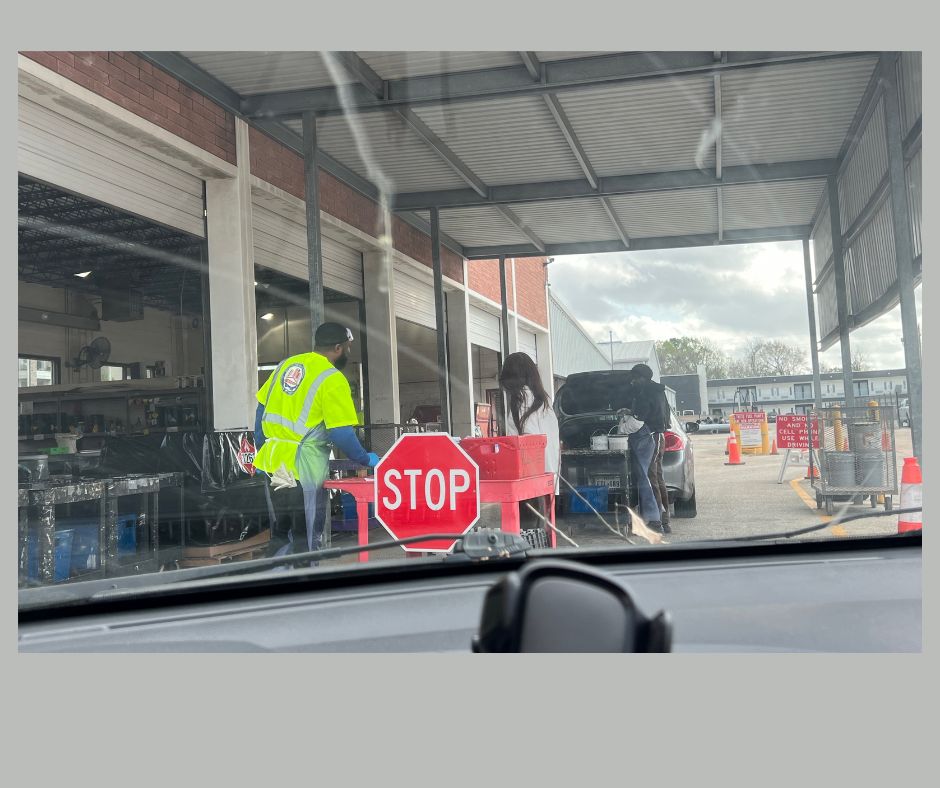
How/Where to properly dispose of HHW?
Some Texas counties and municipalities provide ways for residents to drop off HHW.
The City of Houston Environmental Service Centers North and South take a wide range of HHW. Any city of Houston resident is able to drop items off during the week at either of these facilities.
Harris County Hazardous Waste Facility accepts drop-off from residents in unincorporated parts of Harris County several times a week by appointment only and hosts mobile hazardous waste events for these unincorporated locations in the fall and spring.
The Stella Roberts Recycling Center in Pearland accepts electronics and many other HHW items from residents of Pearland.
Twice a year the City of West U. accepts electronics such as e-readers, computers, and printers for recycling as part of a biannual recycling drop-off event for West U residents only.
Some cities In our area use Waste Management’s At Your Door program. In municipalities that have signed up for this service, residents can arrange to have WM come and pick up any HHW they have right from their door as many times a year as necessary. This program, which requires the city who uses it to pay an annual fee for every household in the city regardless of how many residents use it, is the ultimate in convenience and accepts a wide variety of HHW, including electronics, ensuring that it is properly disposed of.
If you are not in one of the areas discussed above, check the TCEQ page that has a list of drop-off and pick-up programs for HHW by county.
Some businesses also collect certain types of HHW:
Compucycle takes drop-off of residential e-waste at 8019 Kempwood Drive. Check for a list of accepted items and current drop-off times before going.
Best Buy takes many electronics for recycling.
TV manufacturers (such as Samsung, LG, Sony, Vizio), Computer manufacturers (such as Dell, Sony, and HP) and cell phone companies (such as Sprint) have drop off sites or mail-in options to recycle their products.
Home Depot and Lowes both take rechargeable batteries and compact fluorescent bulbs for recycling.
How to safely transport HHW:
If you are transporting HHW to a drop-off facility or event, please:
Keep products in their original container with clear labeling.
DO NOT mix products together.
Store and transport chemicals upright.
Make sure none of your containers is leaking.
The best way to manage HHW is to minimize the HHW you bring into your home to begin with:
Once you’ve cleaned out and properly disposed of your no-longer-useful HHW, consider making non-hazardous choices for projects like pest control and cleaning in the future so you are stopping the problem of finding the proper way to dispose of HHW before it starts. Fire ants can be killed with boiling water rather than toxic chemicals. Why use ammonia when vinegar does wonders as a cleaner? Instead of buying synthetic fertilizer, mow your grass back into your yard and apply compost. Use latex paint rather than oil-based and calculate the amount you actually need for the project so you are not left with extra.
Resources and References:
https://www.epa.gov/hw/
https://www.epa.gov/recycle/
https://www.tceq.texas.gov/p2/