In Our Glacially Slow Response to Climate Change, It is Not Just Glaciers We Are Losing
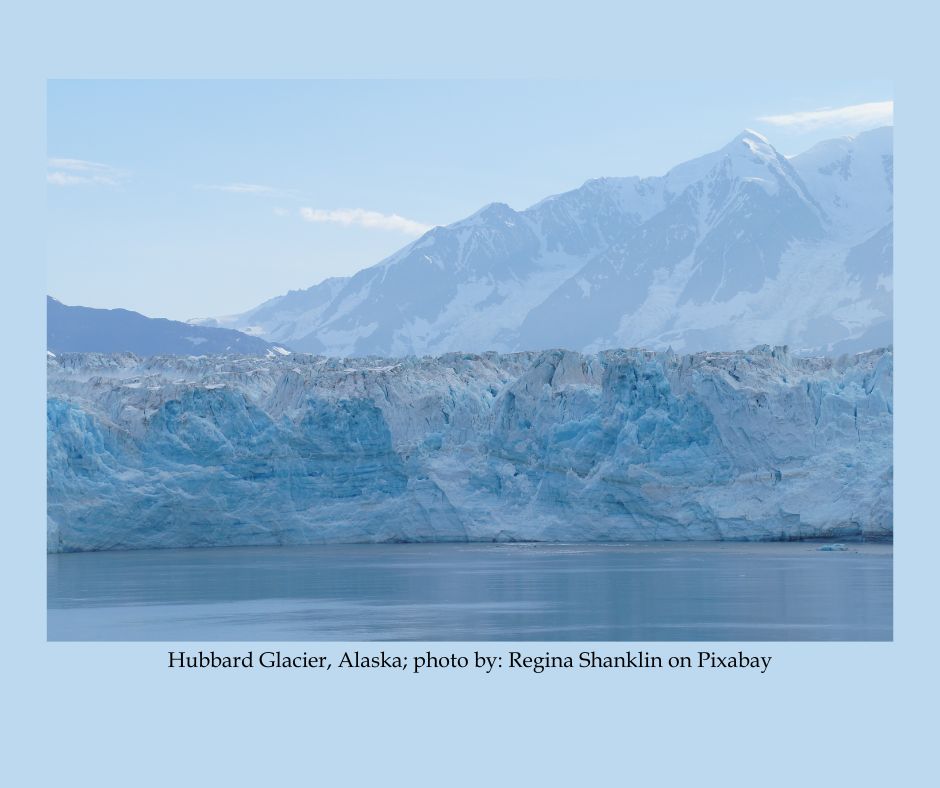
by Susie Hairston
I remember learning about glaciers in middle school in some physical science class; at the time, I did not find them to be particularly compelling or relevant. Perhaps that is because of the dry manner in which they were described that in no way captured their dynamic nature, their power, and their importance to all of us in both their past actions and their present reality.
Before getting into the importance of glaciers, here’s a quick refresher course on what they are and how they behave: A glacier is a huge body of dense ice that lasts for long periods of time. It is made from compacted snow. It moves due to gravity’s effects on its immense weight. Alpine glaciers form in mountains and flow down valleys. These look and act like extremely slow rivers made of frozen water. Continental glaciers are thick sheets of ice covering large areas of land such as the glaciers found in Greenland and Antarctica.
Glaciers move. During ice ages they creep forward. Now, because of climate change, they are creeping and sometimes dashing a fast retreat, melting and rapidly dissipating in a process called sublimation, in which frozen water converts directly to water vapor without going through a liquid stage.
Glaciers shape the land as they advance and retreat. They erode the land over which they move, digging out and carrying with them rocks and soil as they inch forward. Then, they build the land up by depositing this collected rock and soil, making ridges, as they retreat.
I suspect, that as Texans, who live in a place that was never touched by the icy fingers of a glacier creeping forward and inching back, that a lot of people here have given glaciers about the same amount of thought as I did as a kid and have the same take on them I did back then, before I became concerned about what was happening to them due to climate change: glaciers were just physical science you learned about in school in order to pass a test.
It is easy to understand, given the remoteness of glaciers and the way that many have been taught about them that hearing about them melting and disappearing, doesn’t necessarily register for a lot of people. But they are relevant to all of us and always have been.
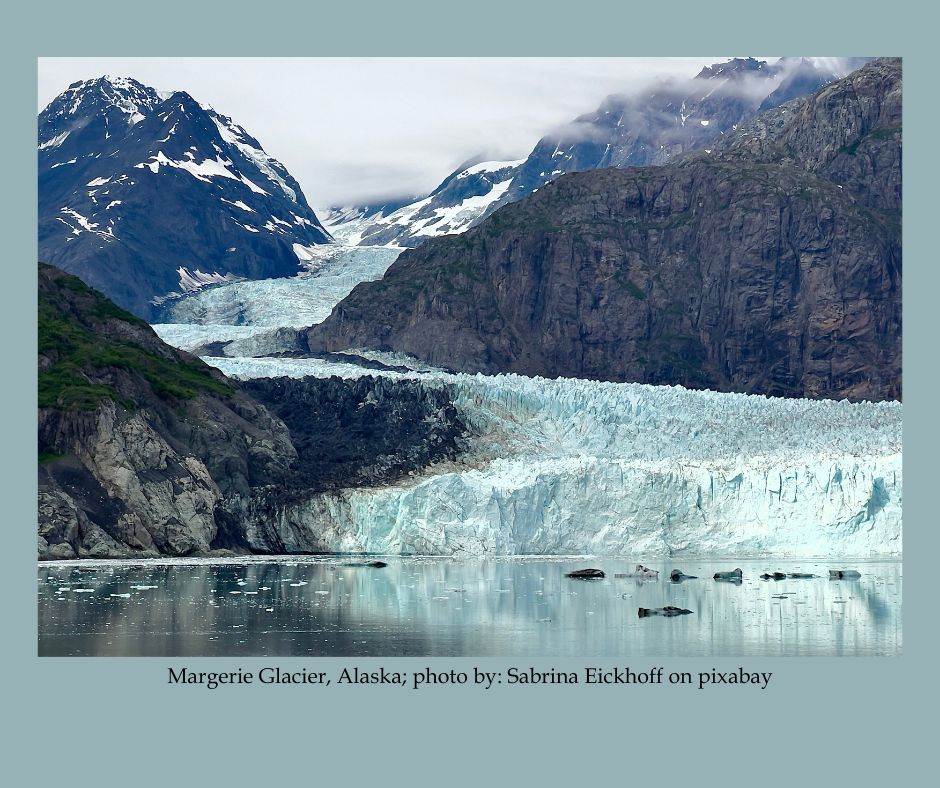
Glaciers are magnificent sculptors of some of the iconic landscapes that we treasure. Glaciers are responsible for the u-shaped valleys in Yosemite National Park. Glaciers sculpted the fjords of Alaskan mountains and are responsible for the formation of the iconic Walden Pond, which, itself, was responsible for the creation of one of the most celebrated works of nature writing and human reflection— Thoreau’s Walden. Given that Walden celebrates nature and man’s connection to it and critiques consumerism, one could almost say that eons ago glaciers sculpted the inspiration for the antidote to the destruction that was coming due to our lack of connection to the rest of the natural world and rampant consumerism; if only we would listen to that wisdom inspired by the sculpture of those long ago glaciers.
Glaciers have shaped so many of the beautiful landscapes we hold dear. And now, due to climate change and their rapid melting and receding, they will continue to dramatically reshape our present and future.
Scientists use the speed of the melting of glaciers as a sign of whether climate change and its impacts are occurring more or less rapidly than models have predicted and adjust the models accordingly.
Melting glaciers are both an impact and a cause of climate change.
Melting glaciers are already causing the sea level rise that is impacting coastal areas. And, Galveston, on our own Texas coastline, is one of the places where sea level has been rising the fastest. Globally, seas have risen about 8” over the last hundred years. During that same period the sea level in Galveston has risen 2 feet. Scientists are predicting that Galveston could experience 200 plus days of flooding per year by 2050.
So if we wonder what relevance glaciers have to the lives of Texans, as an NPR article points out, “Even though Texas is nearly 8,000 miles from Antarctica’s western region, melting ice there will be the main driver of potentially catastrophic sea level rise in the Gulf of Mexico later this century.”
The retreat of glaciers, caused both by melting and by decreases in the snowfall needed to rebuild them, is speeding up climate change. The white ice of glaciers reflects sunlight back into space. When glaciers melt, there is less ice cover left to reflect back the sun and more heat is absorbed by the oceans and land, causing the planet to warm faster.
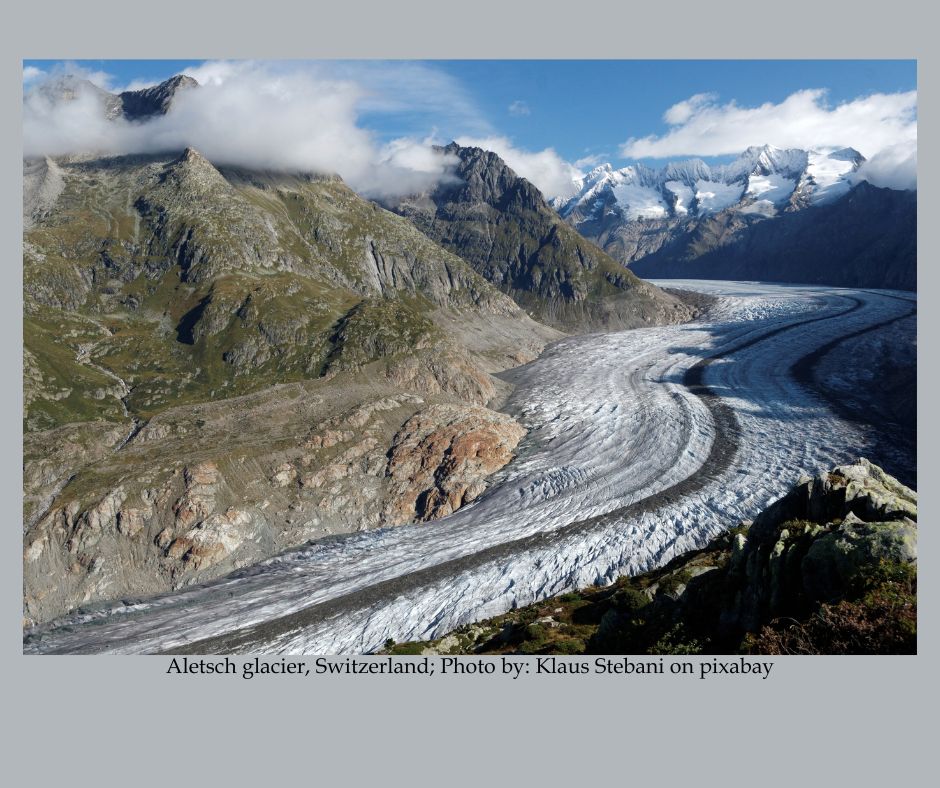
Melting glaciers are threatening the water supply for billions of people. Glaciers supply more than 2 billion people with the water they need for drinking, farming, and hydropower.
Melting glaciers can release dangerous pathogens: Glaciers have many microorganisms from thousands and millions of years ago locked away in their ice. As the glaciers melt, they release these microorganisms. Scientists are concerned that these organisms, to which no currently living being has been exposed, might start deadly epidemics. An anthrax outbreak caused by an ancient caribou that thawed out in melting permafrost in Siberia would indicate that frozen pathogens that are thawing as glaciers melt can be a danger to humans and other animals.
Glaciers are historical archives that are being lost as they melt. Glaciers contain frozen records of carbon dioxide and other atmospheric gas levels and temperature, and information about the constituency of past ecosystems, and other invaluable information going back 800,000 years. As they melt, that historical record will be lost forever, which is why researchers are racing to get and store more ice core samples from glaciers.
Glaciers have personal and cultural significance. Beyond glaciers’ role in sculpting the world as we know it and the world as it is becoming, glaciers are an integral part of the landscapes that our fellow humans love and hold sacred. Each of us has a landscape that we hold dear, like a family member that we cannot bear to lose. Glacial landscapes are that place for some people. This love of glaciers was evident when Iceland held a funeral for the first glacier to “die” (lose so much ice that it was no longer considered a glacier). The funeral was held to bring awareness to the impacts of climate change but also to acknowledge the sense of ecological grief we feel when a part of our world is gone. None of us wants to lose a place we love. And glaciers are loved.
Though at first glance, it might seem that glaciers are remote and disconnected from our lives here in Texas, the fact that they actually have and will continue to have a huge impact on our well-being, is a reminder that our world is interconnected: what impacts one living being or body of water impacts us all.
Resources and references:
“Why Texans need to know how fast Antarctica is melting: West Antarctica contains enough ice to raise global sea levels by more than 10 feet. But the ocean is not a bathtub: Antarctic melt affects some places more than others. And Galveston, Texas, is in the crosshairs” Reporting by Ryan Kellman and Rebecca Hersher https://apps.npr.org/arctic-ice-melting-climate-change/texas-galveston-sea-level-rise.html
https://home.nps.gov/media/video/view.htm?id=025615A1-1DD8-B71B-0B94871F3814C7E3
https://pmc.ncbi.nlm.nih.gov/articles/PMC8164958/
https://www.earthdata.nasa.gov/topics/cryosphere/glaciers/glacier-power/what-is-glacier
https://www.ncei.noaa.gov/news/arctic-ice-study
https://www.nps.gov/subjects/geology/glacial-landforms.htm
https://www.un-glaciers.org/en
Lunde, Maja. The End of the Ocean. HarperVia, January 5, 2021. Print.